

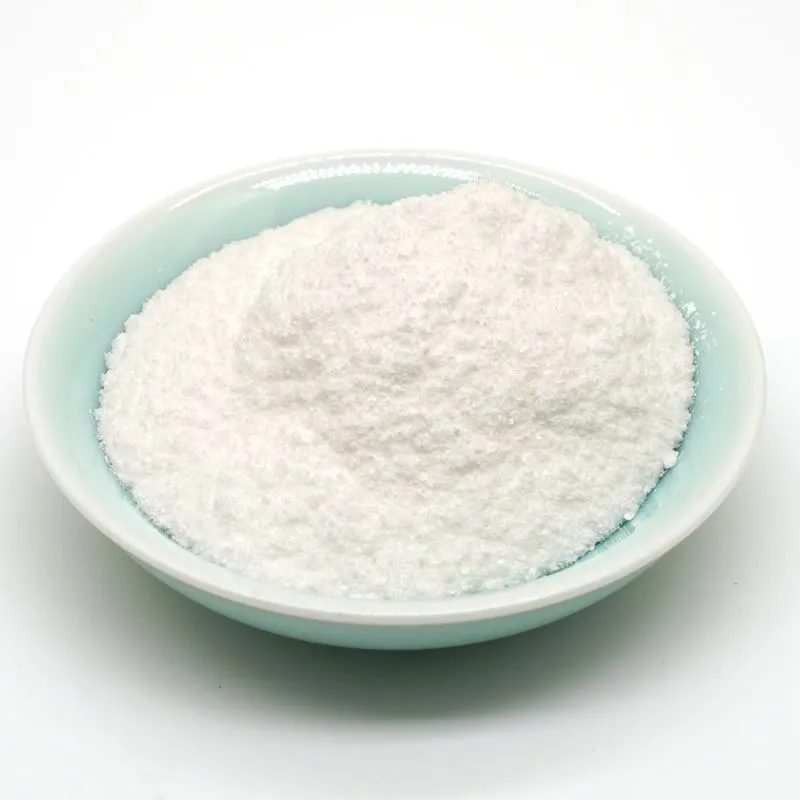


Products Description
Chemical name: Threonine
Chemical formula: C4H9NO3
Molecular weight: 119.119
CAS number: 72-19-5 (L form)
EINECS number: 200-774-1 (L form)
The metabolic pathway of threonine in the body is different from that of other amino acids. It is the only amino acid that does not undergo dehydrogenase action and transamination, but is converted into other substances through catalysis by threonine dehydratase (TDH) and threonine dehydrogenase (TDG) as well as aldolase. The main pathways are: metabolized into glycine and acetaldehyde through aldolase; metabolized into amino proline, glycine, and acetyl-CoA through TDG; metabolized into propionic acid and α-amino butyric acid through TDH.
Products Application
Threonine is an important nutritional enhancer that can be added to grains, pastries, dairy products, and is similar to tryptophan in its ability to alleviate fatigue and promote growth and development. In medicine, due to the presence of hydroxyl groups in its structure, threonine has a water-retaining effect on human skin and combines with oligosaccharide chains to play an important role in protecting cell membranes. It can promote phospholipid synthesis and fatty acid oxidation in the body. Its preparations have the medicinal efficacy of promoting human development and treating fatty liver, and is a component of compound amino acid infusions. At the same time, threonine is also the raw material for manufacturing a type of highly efficient and low-allergic antibiotic - monosamide.
Main food sources: fermented foods (grain products), eggs, spinach, milk, peanuts, rice, carrots, leafy vegetables, papaya, alfalfa, etc.
Threonine is used in medicine, chemical reagents, food enhancers, and feed additives. Especially in the field of feed additives, the usage has increased rapidly. It is often added to the feed for young piglets and poultry, being the second limiting amino acid in pig feed and the third limiting amino acid in poultry feed.
With the improvement of people's living standards and the development of the breeding industry, threonine, as a feed amino acid, is widely used in adding to pig feed, breeder pig feed, meat chicken feed, shrimp feed, and eel feed, etc. It has the following characteristics:
(1) It can adjust the amino acid balance in the feed and promote growth;
(2) It can improve the meat quality;
(3) It can improve the nutritional value of feed raw materials with low amino acid digestibility;
(4) It can produce low-protein feed, helping to save protein resources;
(5) It can reduce the cost of feed raw materials;
(6) It can reduce the nitrogen content in the manure and urine of livestock and poultry, as well as the ammonia concentration and release rate in the livestock and poultry houses.
The necessity of using threonine in feed
Currently, domestic feed resources are relatively scarce, especially the shortage of protein feed such as soybean meal and fish meal, which severely restricts the development of animal husbandry. Threonine is usually the second or third limiting amino acid in pig feed and the third or fourth limiting amino acid in poultry feed. With the widespread application of lysine and methionine synthesis products in compound feed, it has gradually become the main limiting factor affecting the production performance of livestock and poultry. Especially in low-protein diets, adding lysine, threonine becomes the first limiting amino acid for growing pigs.
If threonine is not used in the feed, the regulation of threonine in the feed can only rely on protein raw materials, and protein raw materials not only contain threonine but also other essential and non-essential amino acids. Using protein raw materials without regulating the amino acid balance leads to the result that the amino acid balance of the feed cannot be improved as much as possible, the waste of a large number of essential amino acids cannot be further reduced, and the cost of the feed formula cannot be further reduced. It can be said that threonine is a threshold that must be crossed to improve the amino acid balance, and it is a bottleneck problem that all formulators cannot avoid.
Using threonine can reduce the waste of essential and non-essential amino acids, or lower the crude protein level of the feed. The principle is the same as using lysine chloride salt. The crude protein level of the feed can be reasonably reduced by using crystalline amino acids. The production performance of animals will not be damaged, but may be improved instead.
Products Qualification







Hot Tags: l-threonine, China l-threonine manufacturers, suppliers