

1. Futures Market Review: Raw Sugar Futures Rebound After a Decline
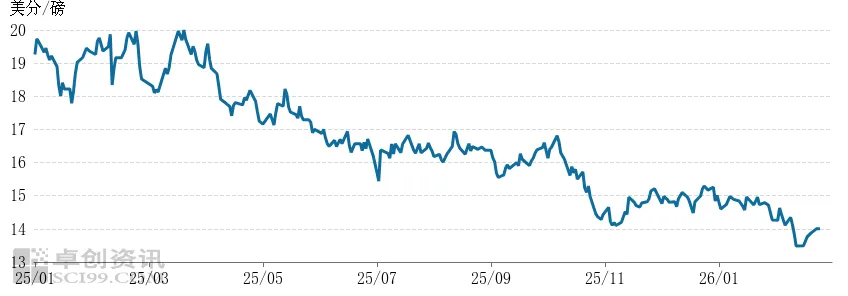
February raw sugar futures prices exhibited a trend of decline followed by a rebound. As of the 26th, the closing price of the ICE raw sugar futures main contract was 13.95 cents/lb, down 2.17% from the beginning of the month. The February main contract traded between 13.34 and 14.13 cents/lb, with a monthly average price of 13.96 cents/lb, down 5.45% month-on-month and 27.90% year-on-year. In the first ten days of the month, dragged down by global oversupply, raw sugar prices continued to decline, falling to a five-year low of 13.34 cents/lb on the 12th. During the Spring Festival holiday, raw sugar futures faced liquidation after overselling, driving price recovery. Coupled with declining sugar production in Brazil and the boost from adjustments to US tariff policies, the international sugar market showed a slight rebound from its lows, but remained under pressure at the key resistance level of 14 cents/lb.
2. Spot Market Review: White Sugar Spot Prices Fluctuate and Rise
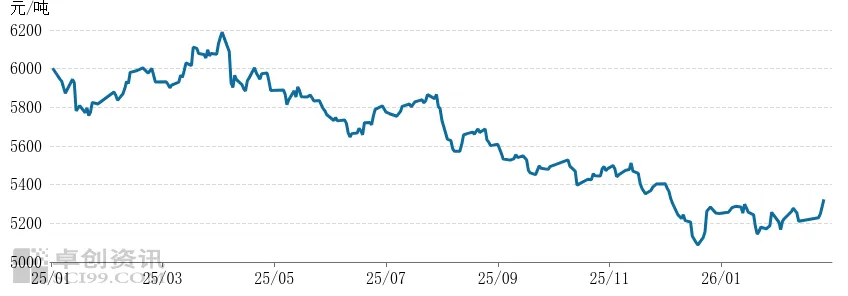
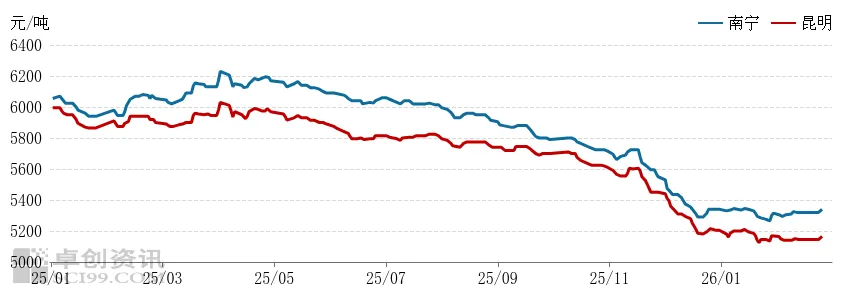
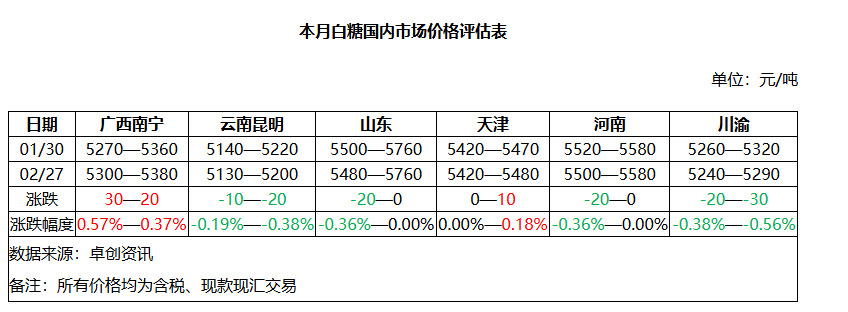
Domestic white sugar spot prices fluctuated and rose in February. At the beginning of the month, dragged down by lower international raw sugar prices and significant sales pressure on domestic sugar mills, domestic white sugar spot prices fluctuated and declined. In the middle of the month, boosted by news, Zhengzhou sugar futures rose sharply, driving domestic spot prices higher. However, due to the approaching Spring Festival holiday, both supply and demand were weak, resulting in low spot trading volume, and sugar prices subsequently stabilized. After the holiday, domestic sugar production resumed, but due to high sugar mill inventories, the initial intention to maintain stable prices and sell off inventory was strong. Later, driven by the rise in Zhengzhou sugar futures, sugar mills tentatively raised their quotations. As of February 27, the price of white sugar in Nanning, Guangxi was 5,340 yuan/ton, up 0.66% from the beginning of the month. The average price for February was 5,316 yuan/ton, unchanged month-on-month and down 11.80% year-on-year. In Tianjin, the price of Guangxi sugar was 5,450 yuan/ton, up 0.18% from the beginning of the month. The average price for February was 5,435 yuan/ton, down 0.80% month-on-month and down 11.41% year-on-year.
3. Supply and Demand Analysis: The market experienced weak supply and demand due to the Spring Festival holiday.
Sugar supply was ample, putting pressure on sugar mills to move their stock. Guangxi, a major sugar-producing region, produced 2.0871 million tons of mixed sugar in January, an increase of 21,500 tons year-on-year. The cumulative sugar production for the current crushing season was 4.029 million tons, a decrease of 788,000 tons year-on-year, with industrial inventory at 2.4784 million tons, an increase of 42,300 tons year-on-year. As of the end of the month, 72 sugar mills in Guangxi were operating, and 1 was shut down. All 52 sugar mills in Yunnan were operating. Although the crushing season in major producing areas like Guangxi and Yunnan is nearing its end, rainfall may delay the crushing process. Sugar mills operated at full capacity during the Spring Festival holiday, and with the concentrated market entry of new sugar after the holiday, mills will still face some pressure to move their stock.
Demand was limited in February, resulting in a slow overall market turnover. According to national sugar sales data, as of the end of January, Guangxi sold 665,800 tons of sugar, a decrease of 82,900 tons year-on-year, with cumulative sales of 1,550,600 tons, a decrease of 830,300 tons year-on-year; Yunnan sold 250,600 tons of sugar, a decrease of 65,500 tons year-on-year, with cumulative sales of new sugar of 532,000 tons, a decrease of 79,800 tons year-on-year. Market demand further decreased before the holiday, with traders and downstream enterprises shifting to just-needed purchases, leading to weaker market activity. After the holiday, the operating rates of major consumer industries such as food and beverage, baking, and cold drinks remained low, and terminal purchasing intentions were weak, with only just-needed replenishment maintained.
4. Market Outlook: The price of white sugar in March is expected to rise slightly month-on-month.
It is expected that domestic white sugar spot prices will fluctuate slightly upward in the first half of March, and may decline somewhat in the latter half. Taking Nanning, Guangxi, a major producing area, as an example, the spot price of white sugar is expected to range between 5,300-5,380 yuan/ton, a month-on-month increase of 0.64%. Brazil's complete shutdown of sugar mills in March led to a temporary contraction in supply from the Southern Hemisphere, creating a short-term supply advantage. However, the continued arrival of new sugar from major Northern Hemisphere producing countries like India and Thailand offset this benefit, leaving the medium- to long-term supply situation ample and potentially limiting any rebound in sugar prices. Some domestic sugar mills may gradually cease operations in March, while imports may decline month-on-month, reducing the impact on the domestic sugar market. However, given the post-holiday off-season, the market's sugar consumption may be slow, limiting upward price potential.
It is expected that white sugar prices will initially rise and then fall over the next three months. Taking Nanning, Guangxi, a major producing area, as an example, the price range may be 5300-5420 yuan/ton. March marks the traditional off-season for domestic consumption, but abnormal weather in major international producing regions may affect the crushing progress in India and Thailand, driving up raw sugar prices and providing some support for domestic sugar prices. In April, with the interplay of bullish and bearish factors, international sugar prices may still see a slight increase. However, domestic sugar mills face some pressure to reduce inventory, which could lead to a slight rise in sugar prices. But as the domestic crushing season comes to an end in May, sugar mills will face increased pressure to move inventory, and prices may fall slightly.
Source: Zhuo Chuang Information)