

[Introduction] Starting in late April, domestic cassava starch spot prices began a new round of increases. On the one hand, international prices remained high and firm, with import costs continuing to rise; on the other hand, traders were holding back sales to maintain prices, tightening supply in the distribution channels. Downstream demand is limited during the off-season, and prices may gradually stop rising by mid-May. In late May, the supply-demand relationship is expected to ease slightly, and spot prices may see a slight decline.
Cassava Starch Spot Prices Experience a Phase of Increase
A week before the May Day holiday, spot prices for cassava starch began a new round of increases. After the holiday, spot prices continued to rise. High import costs, coupled with traders holding back sales and tightening supply in the distribution chain, drove up spot prices. As of May 8th, the mainstream transaction price for Thai cassava starch in Qingdao was 4300-4350 yuan/ton, an increase of 200 yuan/ton (4.85%) compared to April 24th. The mainstream transaction price for Vietnamese cassava starch in Qingdao was 3900-3950 yuan/ton, an increase of 65 yuan/ton (1.68%) compared to April 24th.
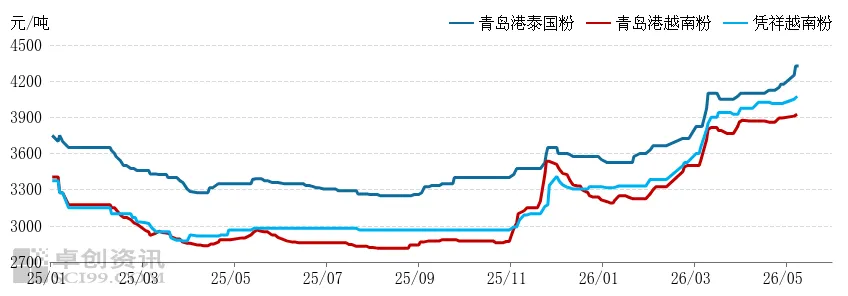
International Cassava Starch Prices Remain Firm, Import Costs Continue to Rise
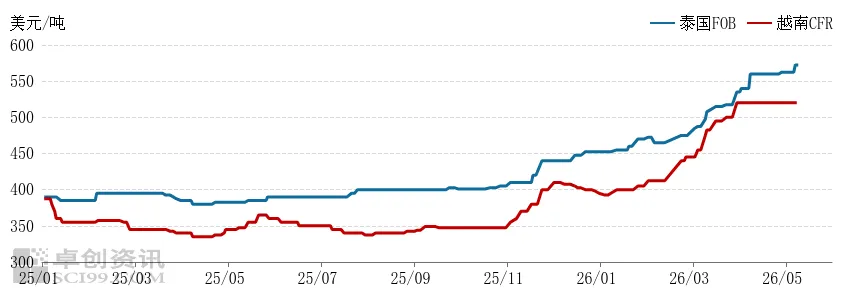
Since April, international cassava starch prices have remained firm, with Thai prices rising. Increased costs and limited supply continue to support international prices. From a cost perspective, rising cassava prices and limited shipping capacity in Southeast Asia have further driven up cassava procurement prices. From a supply perspective, cassava procurement has become more difficult, raw material supply is tight, and factories are operating intermittently or shutting down, resulting in insufficient cassava starch production.
As of May 8th, the intended transaction price for Thai cassava starch was FOB 560-585 yuan/ton, an increase of 12.50 USD/ton (2.23%) compared to April 24th. The mainstream intended transaction price for Vietnamese cassava starch was CFR 500-540 USD/ton, unchanged from April 24th. Therefore, the firm rise in international prices and the continued high import costs, coupled with the gradually increasing costs of previously ordered goods, are providing bullish support for spot prices.
Domestic traders are holding back sales and maintaining high prices, leading to a tightening of supply in the distribution chain.
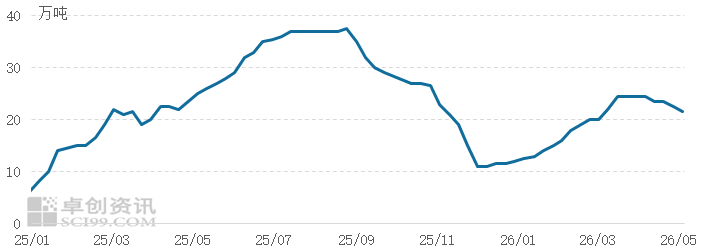
Imported cassava starch costs have risen sharply, resulting in a significant price inversion between domestic and international markets. Since mid-March, traders' enthusiasm for importing has been dampened. Since April, domestic port arrivals have been limited, with only a small amount of Thai starch arriving and most Vietnamese starch import orders fulfilled. Domestic inventory reduction began in late April. According to Zhuochuang Information, as of May 8th, Qingdao Port's inventory was approximately 210,000-220,000 tons, a decrease of about 20,000 tons from April 24th, a reduction of 8.51%. Against this backdrop, traders are increasingly holding back sales and maintaining high prices, leading to a temporary tightening of supply in the distribution chain and driving up spot prices.
Prices may gradually stop rising in mid-May, but a possible decline in the latter half of the month should be anticipated.
From a cost perspective, driven by the difficulty in lowering cassava procurement prices and limited international cassava starch production, international prices are likely to remain high in mid-to-late May, keeping import costs high. From a domestic supply perspective, traders will maintain a price-supporting stance in mid-May, leading to continued tightening of supply in the distribution sector. With substantial profits in the trading sector, some traders may begin to sell off their inventory in late May to secure profits, potentially increasing supply in the distribution sector. From a demand perspective, temperatures will continue to rise across the country in mid-to-late May, leading to the traditional off-season for the vermicelli industry, reduced operating rates at vermicelli factories, and decreased demand for cassava starch. In summary, high costs and continued tight supply in mid-May, coupled with limited downstream demand, create a balancing effect in the market, suggesting that spot prices may gradually stop rising. The supply-demand relationship may ease slightly in the latter half of the month, and spot prices may see a slight decline, with the expected drop in Qingdao Vietnamese vermicelli prices around 50 yuan/ton.
Source: Zhuo Chuang Information