

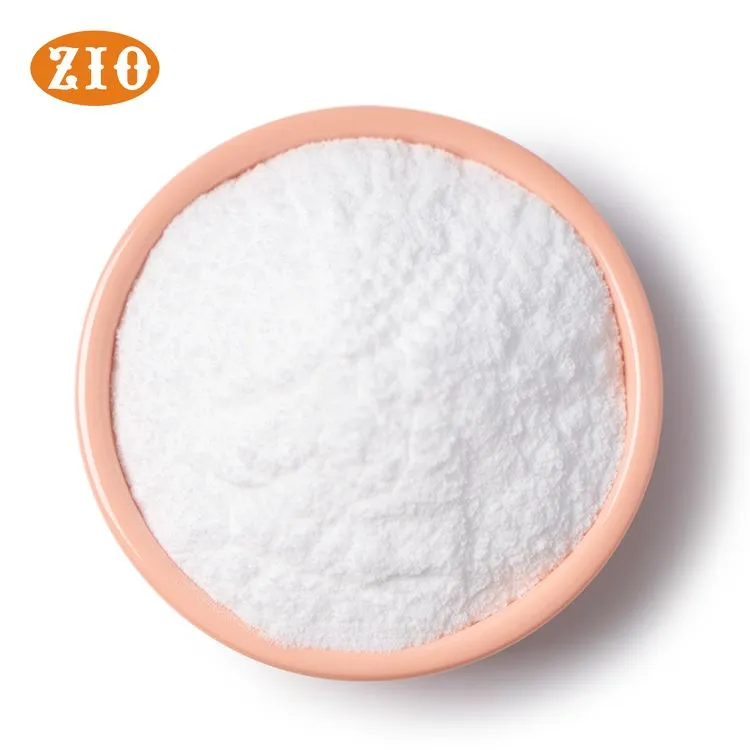


Products Description
Chemical formula: C12H22O11
Molecular weight: 342.297
CAS number: 99-20-7
EINECS number: 202-739-6
Melting point: 214 ℃
Boiling point: 397.76 ℃
Water solubility: 68.9g/100g water (25℃)
Density: 1.512 g/cm³
Trehalose has three optical isomers: α,α-trehalose (mushroom sugar), α,β-trehalose (neotrehalose), and β,β-trehalose (isotrehalose). Among them, only α,α-trehalose exists in a free state in nature, which is commonly referred to as trehalose and is widely present in various organisms, including bacteria, yeast, fungi, algae, and some insects, invertebrates, and plants. It is especially abundant in yeast. Trehalose is also found in fermented foods such as bread and beer, as well as in shrimp. α,β-type and β,β-type are rarely seen in nature and only small amounts of α,β-type trehalose have been found in honey and royal jelly. Both α,β-type and β,β-type trehalose can be chemically synthesized.
Trehalose is a growth factor for beneficial intestinal bacteria - bifidobacteria. It can improve the micro-environment of the intestinal tract, enhance the digestive and absorption functions of the gastrointestinal tract, effectively eliminate toxins from the body, and enhance the immune and disease-resistant ability of the body. Studies have also proved that trehalose has a strong radiation-protective effect.
|
Item |
Specifications |
Result |
|
Appearance |
White crystal powder |
Conforms |
|
Odor |
odorless |
Conforms |
|
Taste |
Sweetness |
Conforms |
|
Trehalose content (As Dry basis)% |
≥98.0 |
99.17 |
|
pH(30% solution) |
5.0~6.7 |
6.42 |
|
Residue on ignition % |
≤0.05 |
0.03 |
|
Loss on drying(60℃,5h)% |
≤1.5 |
0.82 |
|
Color in solution(30% solution) |
≤0.100 |
0.013 |
|
Turbidity(30% solution) |
≤0.050 |
0.007 |
|
Total aerobic count cfu/g |
≤3000 |
<10 |
|
Coliform MPN/100g |
≤30 |
<30 |
|
Pathogenic bacterium(Salmonella, Shigella, Staphylococcus aureus) |
Negative |
Negative |
Products Application
Because this sugar has unique biological functions, it can effectively maintain the stability and integrity of intracellular membranes, proteins, and active peptides under adverse conditions, and is thus hailed as the "sugar of life". It can be widely used in various industries such as biopharmaceuticals, medicine, food, health supplements, fine chemicals, cosmetics, feed, and agricultural science.
1. Food Industry
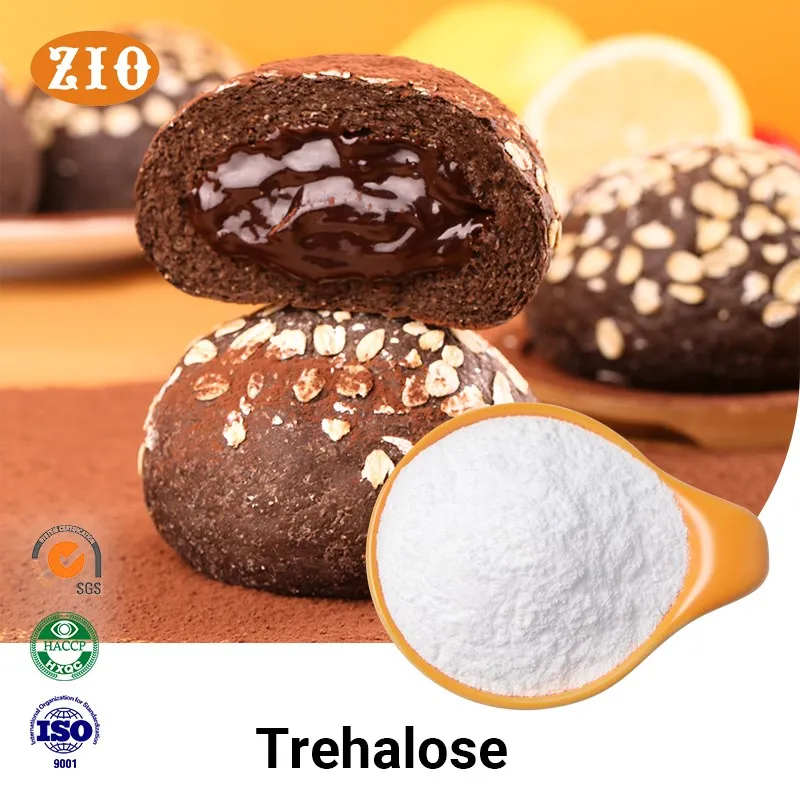
In the food industry, currently, various uses of seaweed sugar are being developed and researched based on its non-reducing property, moisturizing property, anti-freezing and drought resistance, high-quality sweetness, energy source, and other functions and characteristics. Seaweed sugar products can be applied to various foods and seasonings, thereby significantly improving the quality of food and increasing the variety of food, promoting the further development of the food industry.
The functional characteristics of seaweed sugar and its application in food: (1) Preventing starch aging (2) Preventing protein denaturation (3) Inhibiting lipid oxidation and deterioration (4) Flavor correction (5) Maintaining the stability and freshness of vegetables and meats (6) Long-lasting and stable energy source.
2. Pharmaceutical Industry
Seaweed sugar can be used as a stabilizer for reagent drugs and diagnostic drugs in the pharmaceutical industry. Currently, various applications of seaweed sugar are being explored based on its non-reducing property, stability, protection of biological macromolecules, and energy supply functions and characteristics. By drying biological active substances such as vaccines, globulins, and viruses with seaweed sugar, they can regain vitality after rehydration. Seaweed sugar can replace plasma as a biological product and stabilizer, enabling long-term preservation, preventing contamination, and ensuring the safety of biological products.
3. Cosmetics
Due to its strong moisturizing effect and various physiological functions such as sun protection and UV protection, seaweed sugar can be added as a moisturizer, protective agent, etc. to lotions, masks, essences, facial cleansers, etc., and can also be used as a sweetener and quality improver for lipsticks, oral cleaners, oral fragrances, etc. Anhydrous seaweed sugar can also be used as a lipid and enzyme dehydrating agent in cosmetics, and its fatty acid derivatives are excellent surfactants.
4. Crop Breeding
Using biotechnology to introduce the seaweed sugar synthase gene into crops and expressing it in the crops, constructing transgenic plants that produce seaweed sugar, cultivating new varieties of genetically resistant to cold and drought, improving the cold and drought resistance of crops, and making them appear fresh after harvest and processing, while maintaining their original flavor and texture.
Seaweed sugar can also be used for seed preservation, etc. After using seaweed sugar, it can effectively retain water molecules in the roots and stems of seeds and seedlings, facilitating crop sowing and high survival rate, and protecting crops from freezing damage due to cold, which is of great significance for reducing production costs, especially in the harsh and dry climate of northern regions.
Products Details
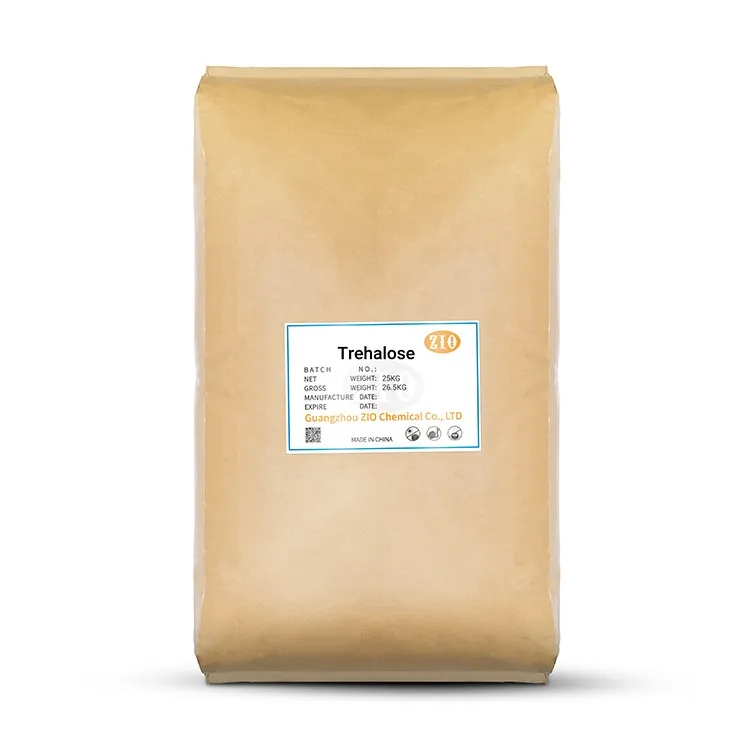
Products Qualification







Hot Tags: sweetener trehalose, China sweetener trehalose manufacturers, suppliers