



Products Description
Product name: D-Mannitol
Chemical formula: C6H14O6
Molecular weight: 182.172
CAS number: 87-78-5
EINECS number: 201-770-2
Melting point: 166 to 168 ℃
Boiling point: 494.9 ℃
Water solubility: Highly soluble
Density: 1.596 g/cm³
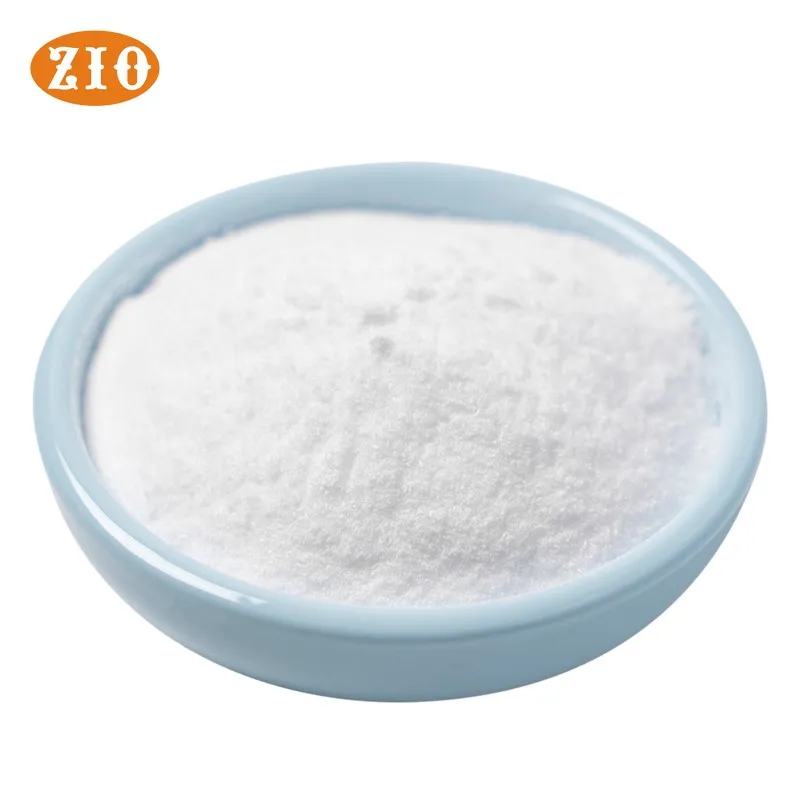
Appearance: White crystalline powder
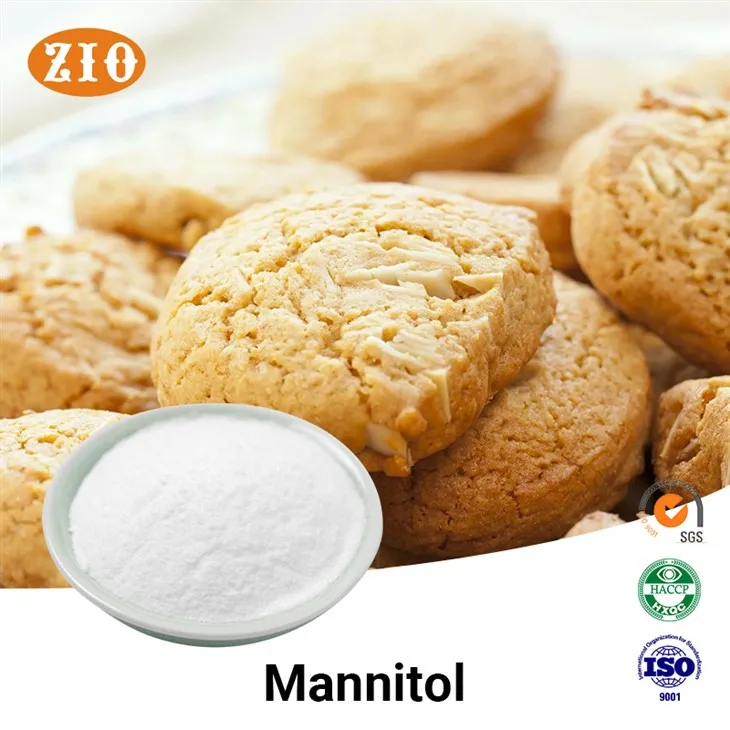
Mannitol, also known as manna alcohol, has the chemical formula C6H14O6. It is a white crystalline solid belonging to the hexahydroxy alcohol class and is a commonly used dehydrating agent with diuretic effects. It can also be used as a sweetener. Mannitol is classified as a sugar alcohol, which is derived from the reduction of sugars (mannose). Other common sugar alcohols include xylitol and sorbitol. Mannitol and sorbitol are isomers, with the main difference being the position of the hydroxyl group on the second carbon atom. Mannitol is included in the World Health Organization's Model List of Essential Medicines, indicating that it is one of the indispensable important drugs in the basic medical and health care system.
|
Items |
Specifications |
Analysis results |
|
Appearance |
White crystalline powder, odorless, with sweet taste. |
Conforms |
|
Content w/% |
96.0~101.5 |
99.5 |
|
Loss on drying w/% |
≤0.3 |
0.07 |
|
PH(100g/L solution) |
4.0~7.5 |
6.0 |
|
Residue on ignition w/% |
≤0.1 |
0.02 |
|
Reducing sugar w/% |
≤0.3 |
<0.3 |
|
Nickel(Ni) mg/kg |
≤1.0 |
<1.0 |
|
Lead (Pb) mg/kg |
≤1.0 |
<1.0 |
|
melting point |
164~169℃ |
166~168℃ |
|
revertose |
≤0.3% |
<0.3% |
|
chloride |
≤50 mg/kg |
<50mg/kg |
|
sulfate |
≤100 mg/kg |
<100 mg/kg |
|
arsenaat |
≤2 mg/kg |
<2mg/kg |
Products Application
Pharmaceutical Application
Mannitol injection (Injectio Mannitou) is a commonly used hypertonic blood pressure-lowering drug in clinical practice, playing an important role in the rescue of critical and severe conditions, especially in neurological diseases. Its mechanism of action is clear, it takes effect quickly, and its blood pressure-lowering effect is definite, meeting the strict requirements of clinical for drugs for reducing intracranial pressure. After intravenous injection, this drug increases plasma osmotic pressure, promoting the transfer of interstitial fluid into the blood vessels, thereby exerting a significant diuretic effect and effectively reducing intracranial pressure and intraocular pressure. Its unique pharmacokinetic characteristics are manifested as: after passing through the glomerulus, it is almost not reabsorbed by the renal tubules, and through increasing urine osmotic pressure, it produces a powerful osmotic diuresis effect, eliminating a large amount of water. Based on these pharmacological characteristics, mannitol injection is widely used in the following clinical situations: head trauma, brain tumors, edema caused by brain tissue hypoxia; edema caused by extensive burns; ascites caused by renal failure; and emergency blood pressure reduction treatment for acute glaucoma.
Mannitol has no hygroscopicity, dries quickly, has good chemical stability, and has characteristics such as a pleasant taste and good granulation. It is used in most tablets such as anti-cancer drugs, antibacterial drugs, antihistamines, and vitamins. It is also used in chewable tablets such as alcohol-washing tablets and mouth-cleansing agents.
Food Industry
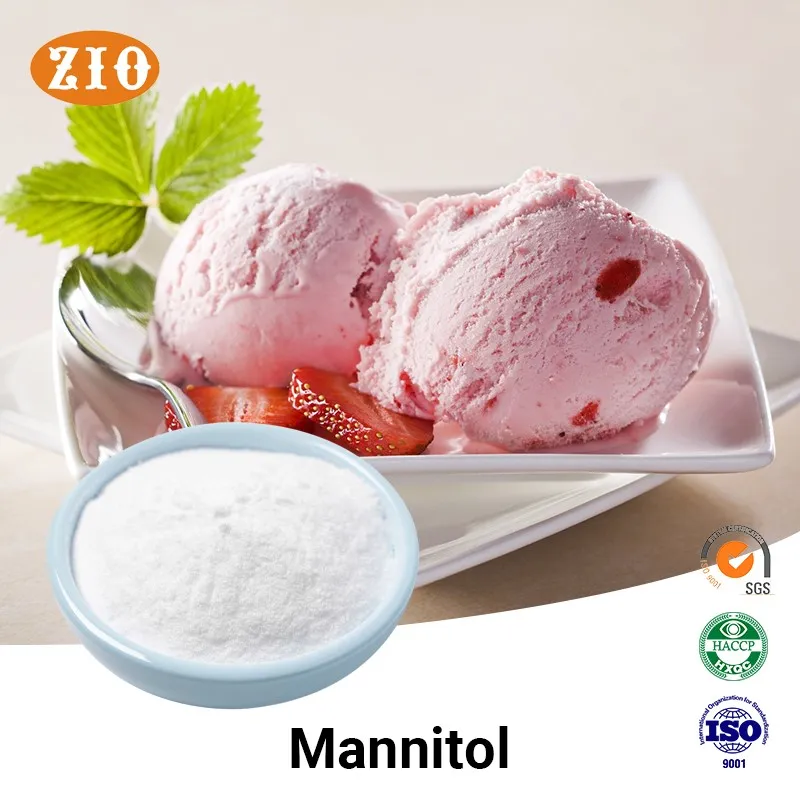
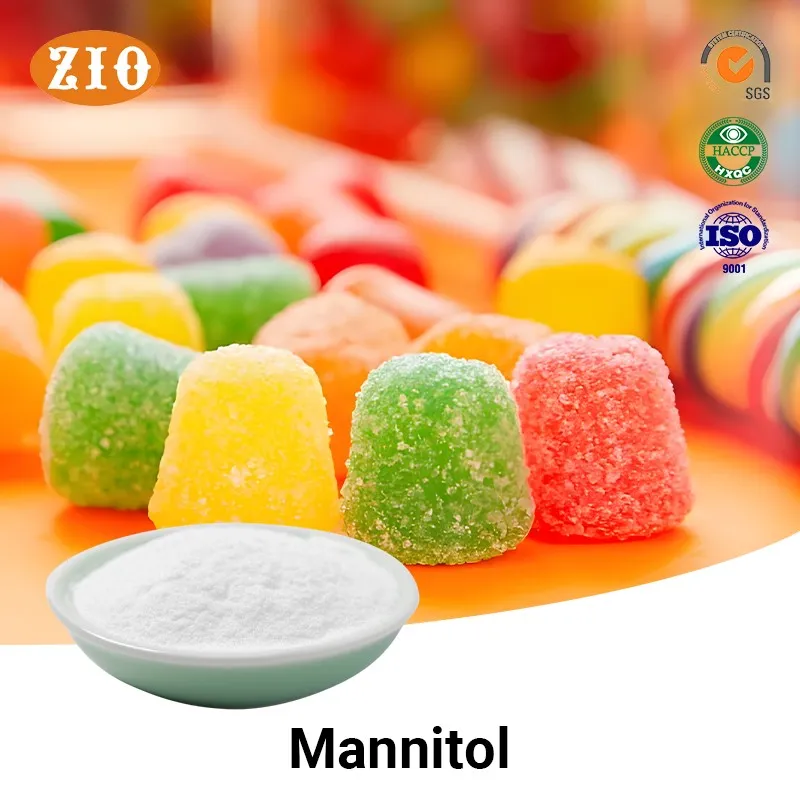
In the food industry, this product has the least water absorption among sugars and sugar alcohols and has a pleasant sweet taste. It is used for anti-sticking in foods such as maltose, chewing gum, and rice cakes, as well as for general pastries as an anti-sticking powder. It can be obtained by reacting with hydrobromic acid to form dihydrogen mannitol.
It can also be used as a low-calorie, low-sugar sweetener for food for diabetic patients, fitness food, etc.
On February 2025, the innovation team of the Bee Quality and Risk Assessment Research Institute of the Chinese Academy of Agricultural Sciences, in collaboration with multiple domestic and foreign research institutions, first proposed that mannitol can be an important characteristic chemical marker for authentic identification of honey from stingless bees.
Industrial Production
Polymannitol-oxypolypropylene ether, which is produced by pressurizing mannitol as the starting agent, is widely used in the plastic industry. The hard polyurethane foam plastic based on polymannitol-oxypolypropylene ether has good oil resistance, heat resistance, and oxidation resistance, and its heat resistance even reaches 180 ℃.
In the fine chemical industry, the product obtained by esterifying stearic acid with mannitol is widely used: as a food emulsifier and dispersant, it can be widely used in pastries, candies, beverages, etc., and also as an emulsifier and dispersant in the industries of coatings, textiles, cosmetics, and medicine.
In addition, mannitol is also used to produce rosin acid esters and artificial glycerol resins, explosives, and detonators (nitro-mannitol), as a plasticizer for polyvinyl chloride in the plastic industry, and as a moisturizer in cosmetics, etc. In chemical analysis, it is used for the determination of boron, and in biological detection, it is used as a bacterial culture agent, etc.
Mannitol (about 7%) is often used to prevent the thickening of the suspension of antacid hydroxyl aluminum, and there is a suggestion to use it as a plasticizer for soft capsules. Granular mannitol has good fluidity and can improve the fluidity of other less fluid substances when added to them, but the addition amount should not exceed 25% (by weight) of the concentration of other substances.
Products Details
Company Qualification








Hot Tags: mannitol powder, China mannitol powder manufacturers, suppliers