

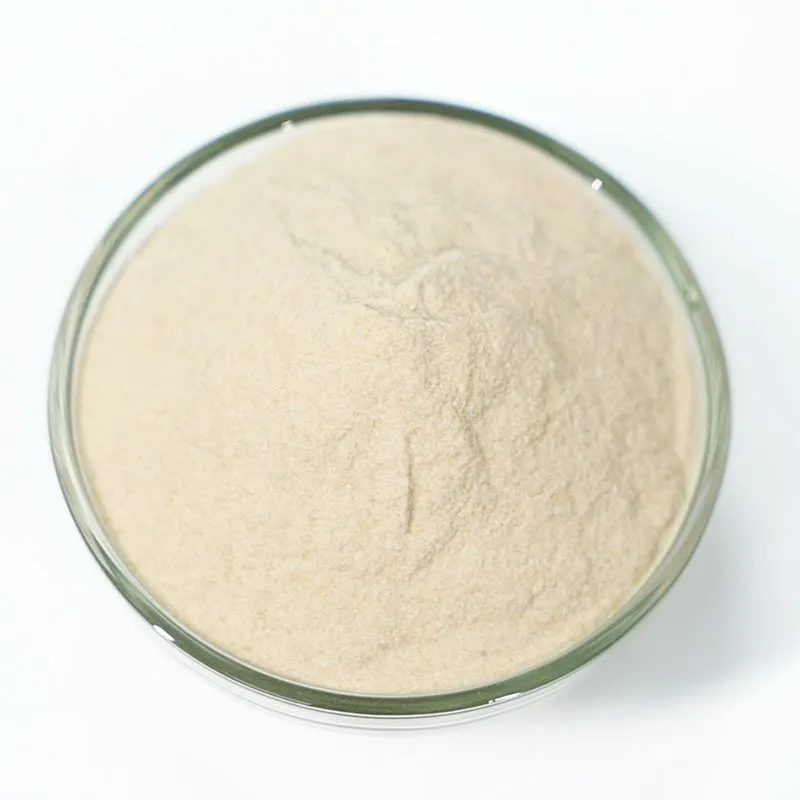


Products Description
Pectin is a type of polysaccharide, consisting of two types: homopolysaccharides and heteropolysaccharides. They are mostly found in the cell walls and inner layers of plant cells, and are abundantly present in the peels of citrus fruits, lemons, and pomelos, etc. It appears as a white to yellow powder, with a relative molecular mass ranging from 20,000 to 400,000, and has no taste. It is more stable in acidic solutions than in alkaline solutions. Generally, it is classified into high-ester pectin and low-ester pectin based on its esterification degree. High-ester pectin forms an irreversible gel when the soluble sugar content is ≥ 60% and the pH is 2.6 - 3.4. Some of the methyl esters of low-ester pectin are converted to primary amides, which are not affected by sugar and acid, but can form a gel only when combined with divalent ions such as calcium and magnesium.
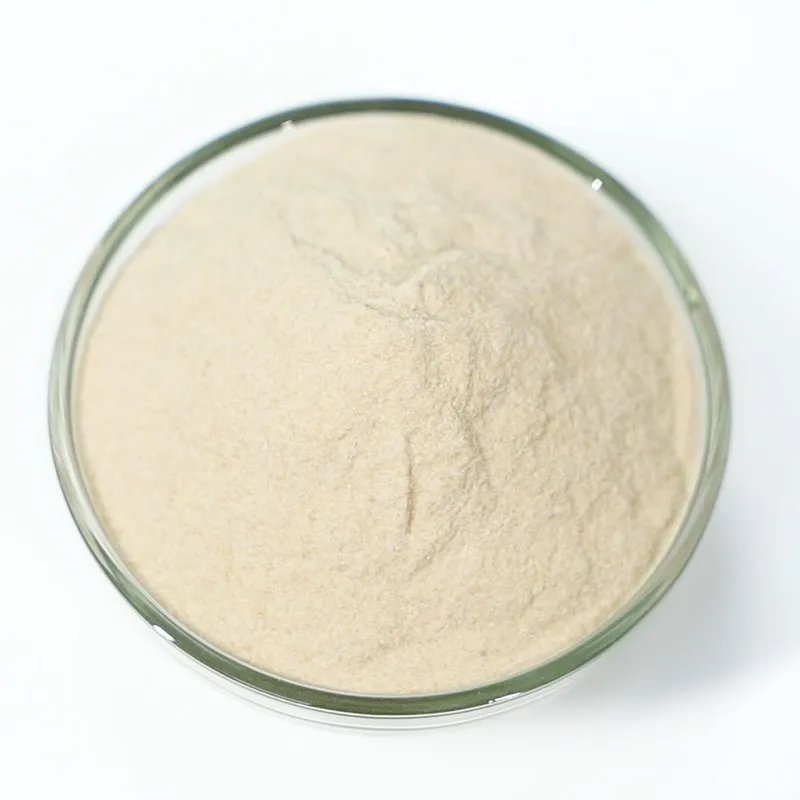
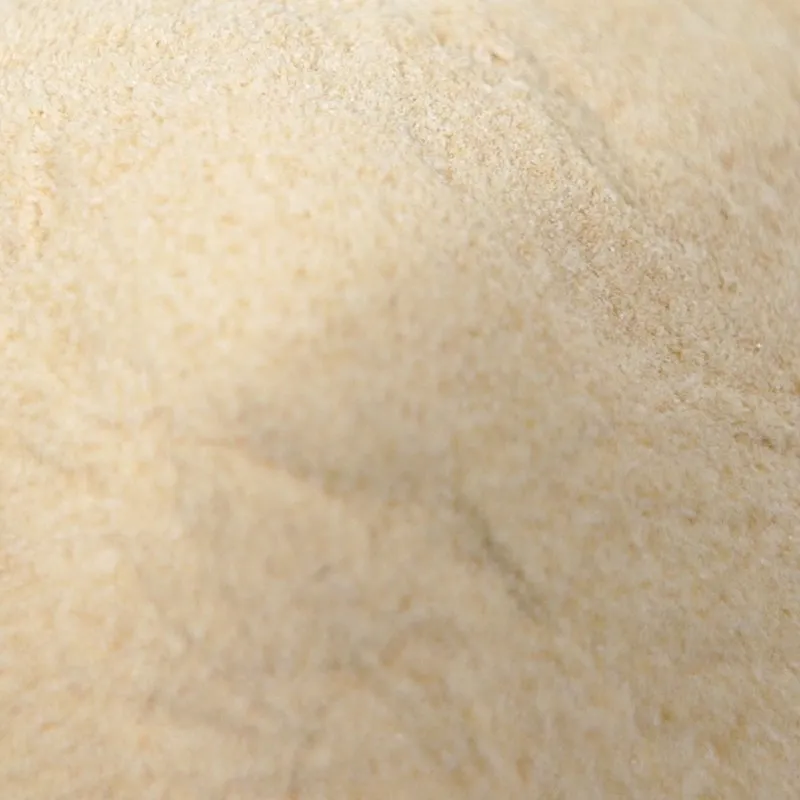
Pectin is a coarse to fine powder that is white, yellowish, or light grayish-brown. It has almost no odor and has a sticky and smooth texture. It dissolves in 20 times its volume of water, forming a milky white viscous colloidal solution that is slightly acidic. It has strong heat resistance and is almost insoluble in ethanol and other organic solvents. It can be moistened with ethanol, glycerin, or sugar syrup, or mixed with more than three times its volume of sugar to increase its solubility. It is more stable in acidic solutions than in alkaline solutions.
|
Items |
Limits |
Test results |
|
Loss on Drying % |
≤12.0% |
8.2 |
|
Acid insoluble ash, % |
≤1.0% |
<1 |
|
PH value (2% solution) |
3.8-4.5 |
3.9 |
|
Sulfur dioxide(SO2) (mg/kg) |
≤10.0 |
<10 |
|
The total galacturonic acid, % |
≥65 |
>65 |
|
Degree of esterification (DE), % |
27±3 |
24.4 |
|
Degree of amidation(DA), % |
22±3 |
22.7 |
|
Lead(Pb), mg/kg |
≤5 |
<5 |
Products Application
Pectin has always been a part of human natural diet. It is a safe and non-toxic natural food additive recommended by the FAO/WHO Joint Committee on Food Additives, with no daily dosage limit. Pectin has many functions. For example, as a natural plant colloid, pectin can be used as a gelling agent, stabilizer, tissue-forming agent, emulsifier and thickener, and is widely used in the food industry; pectin is also a water-soluble dietary fiber, which has the functions of enhancing gastrointestinal peristalsis and promoting nutrient absorption. It has good therapeutic effects on diseases such as diarrhea, intestinal cancer, diabetes and obesity, and is an excellent base for drug preparations. At the same time, pectin is a good adsorbent for heavy metals. This is because the molecular chains of pectin can form a "egg box"-like network structure with high-valent metal ions, making pectin have a good function of adsorbing heavy metals; in addition, pectin has the property of forming a film, good water retention and radiation resistance.
Food Industry
Pectin, as a food additive or ingredient, is applied in the food industry, mainly playing roles such as gelation, thickening, improvement of texture, emulsification and stabilization.
(1) Yogurt Products
During the production of yogurt, different types of pectin have different functions. For example, adding high ester pectin can stabilize the structure of yogurt, while adding low methoxy pectin can prevent the precipitation of whey. In the process of making yogurt, the amount of pectin additives needs to be strictly controlled. If not adding sufficient additives, the charge will neutralize, the repulsive force will fade, and the structure of the dairy product cannot be stabilized. Only by continuing to add can new repulsive force be generated, and then the structure of acidic dairy products can be maintained stable.
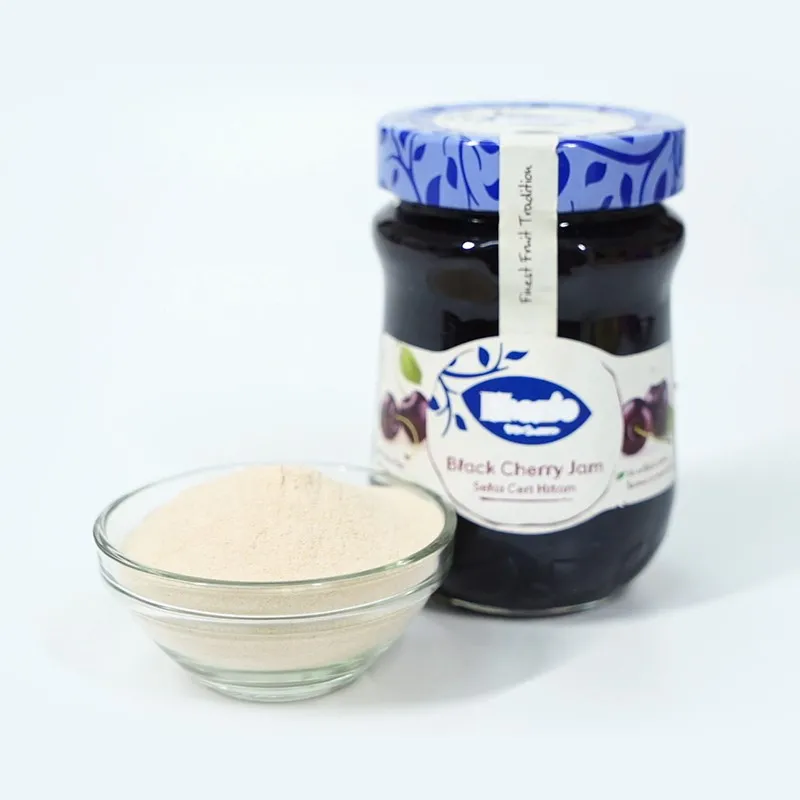
(2) Jam
If the content of pectin in the raw materials is too low when making jam, then the thickening effect of pectin can be utilized, and 0.20% pectin can be used as a thickening agent. The usage of pectin in low sugar jam is about 0.60%. The formula for low sugar strawberry jam is 50.00% strawberries, 36.00% sugar, 13.00% water, 0.60% amideated low methoxy pectin and 0.40% citric acid. In the above strawberry jam formula, amideated low methoxy pectin or methoxy pectin can be used, because there are certain amounts of calcium ions in fruits and water, so no calcium salts need to be added.
(3) Bread
High methoxy pectin has extremely strong water absorption properties. It can not only increase the amount of dough but also improve the freshness, stability and softness of the dough. Because the dough after adding pectin has better extensibility, the baking volume of bread will increase. For example, in the production of hamburgers, if the volume of the hamburger remains unchanged, but pectin is added, the amount of flour used to make the same volume of hamburgers will decrease by 30%. In addition, bread made with the dough after adding pectin can extend the shelf life of the bread.
(4) Beverages
With the increasing attention to dietary health, low sugar beverages have become increasingly popular in the market nowadays. However, the reduced sweetness of beverages also leads to a decline in taste. To address this, 0.05% to 0.10% high methoxy pectin can be added to increase the taste of the beverages. High methoxy pectin is a suspending agent. When added to beverages containing fruit pulp, it can undergo a gelation reaction with calcium ions, thereby reducing hard substances caused by fruit pulp sedimentation and allowing fruit particles to uniformly suspend in the beverage. It can also improve the taste of fruit juice, overcoming the shortcomings of poor plasticity, strong fishy flavor and high turbidity of alginate sodium, and having the health benefits of promoting digestion and detoxifying lead poisoning.
Health food and medicine
Pectin is a polysaccharide substance that helps control blood sugar and blood lipids. Currently, there are products using pectin in domestic drugs and health supplements, but the dosage of pectin is not yet significant.
Unlike other dietary fibers, pectin has structural characteristics that make it have good water solubility and high viscosity. [2] This soluble dietary fiber can remove food additives and metal residues from the human system.
Other applications
Furthermore, due to the excellent water-retaining properties and radiation-resistant function of pectin, it can be applied in food packaging films, diapers, cosmetics and toothpaste.
Products Details
Products Package
Company Qualification



Hot Tags: apple pectin powder pectin powder food grade for making jelly, China apple pectin powder pectin powder food grade for making jelly manufacturers, suppliers