

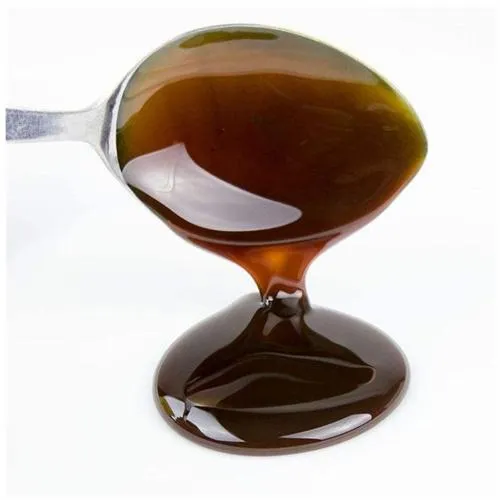


Products Description
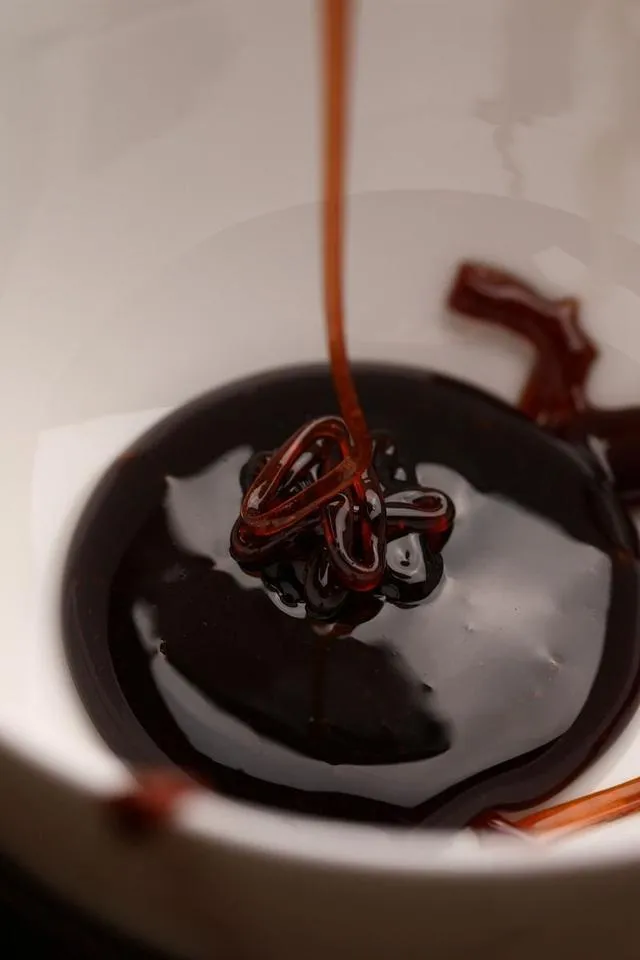
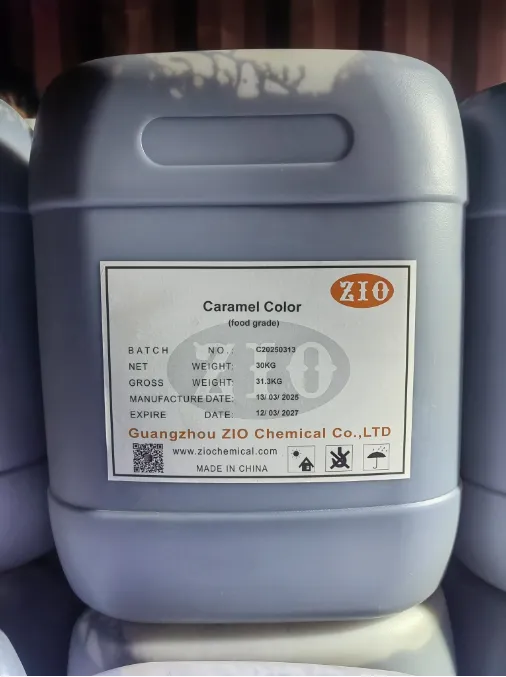
Caramel color, also known as sauce color or caramel color, is a complex reddish-brown or dark brown mixture formed by the dehydration, decomposition, and polymerization of sugar substances (such as invert sugar, sucrose, molasses, converted sugar, lactose, malt syrup, and the hydrolysis products of starch, etc.) at high temperatures. Some of these are colloidal aggregates and are widely used as semi-natural food colorants. Caramel color is also called caramel and is written as "Caramel" in English. Caramel color is a widely used natural colorant in the food industry and is an important member of food additives.
According to the definition in the U.S. Food Chemicals Codex, caramel color is usually a complex mixed compound, some of which exist in the form of colloidal aggregates and can be made by heating carbohydrate alone or synthesized with the participation of edible acids, bases, and salts. Caramel color is usually a brown-black to black liquid or solid, has a burnt sugar odor, and has a certain bitterness. Its raw materials are mostly fructose, glucose, converted sugar, sucrose, and the hydrolysis products or partial hydrolysis products of starch .
Caramel color is often used in the production of desserts. It can provide a filling flavor for candies or chocolate, or be added to ice cream and custard. Or it can be used as a food melanin, such as in beverages like cola, where caramel coloring is used, and it is also used as a food colorant. It is the only additive allowed in the whisky industry. Caramel color is soluble in water.
Product Parameters
Type Classification: Class I (Ordinary Caramel), Class II (Ammonium Sulfite Method Caramel), Class III (Ammonia Method Caramel), Class IV (Ammonium Sulfite - Ammonia Method Caramel)
Color Rating (EBC Value): 5,000 - 50,000 (Customizable)
pH Range Applicable: 2.0 - 8.0 (Acid-resistant/Basically resistant options available)
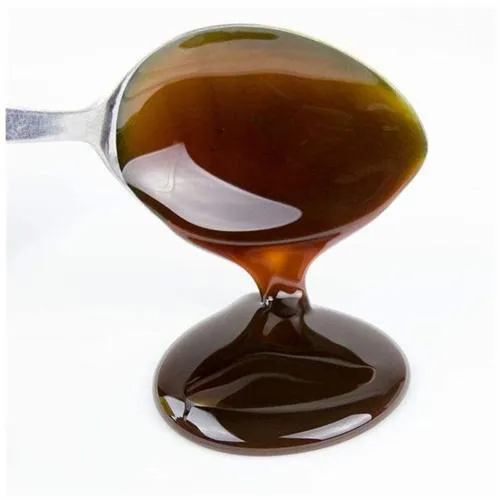
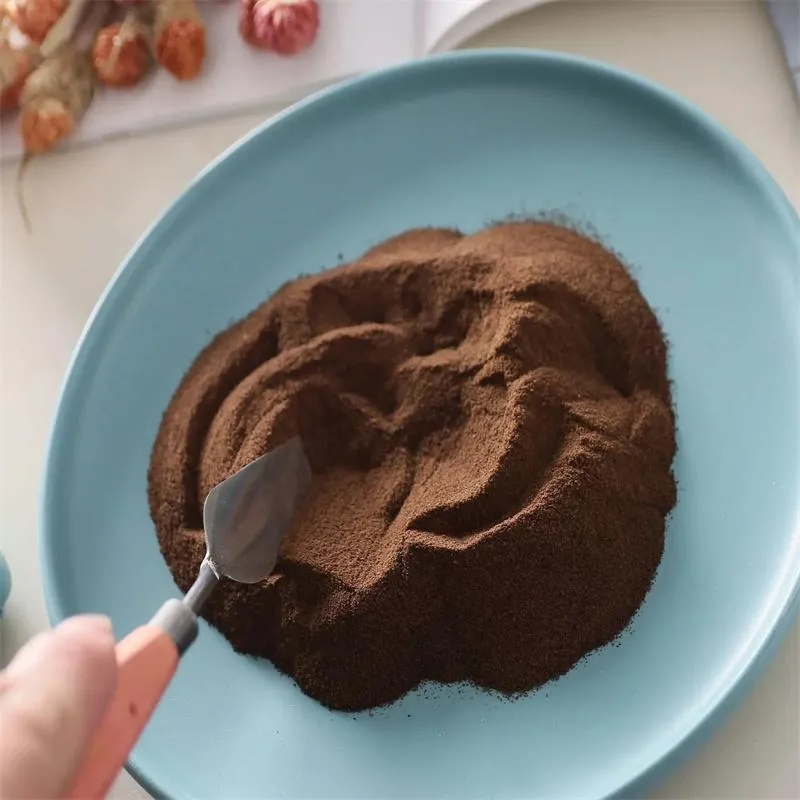
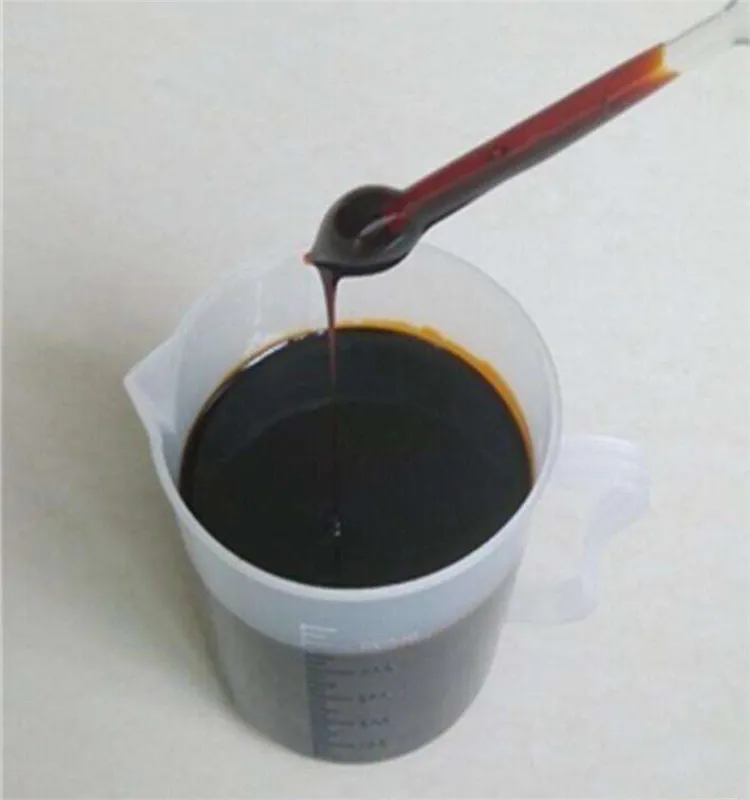
Appearance: Dark brown to dark brown liquid or powder
Solubility: Easily soluble in water, no suspended particles
Shelf Life: 12 months for liquid, 24 months for powder (Sealed and protected from light)
Core Advantages
✅ Natural and Safe: Non-synthetic colorant
✅ High Stability: Resistant to high temperatures, light, acids and alkalis, suitable for complex processing environments.
✅ Uniform Coloring: Dual form of liquid/powder, rapid dissolution, no impurity precipitation.
✅ Wide Compatibility: Collaborates with various food ingredients without affecting taste and flavor.
|
Items |
Standard |
Result |
|
Colour |
Blackish-brown |
Blackish-brown |
|
Status |
Liquid, powder or granule |
Liquid |
|
Smell |
It has the smoky aroma of caramel |
Pass |
|
Absorbancy (610nm) |
0.01-1.00 |
0.14 |
|
Color rate(0.1%,1cm,610nm) |
------ |
36842 |
|
Red index |
------ |
5.3 |
|
PH |
------ |
4.29 |
|
Viscosity |
------ |
5000 |
|
Salt resistance test(18%Nacl) |
No sediment |
No sediment |
|
Ammonia nitrogen (as NH), w/% |
≤0.6 |
Pass |
|
Sulfur dioxide (as SO), w/% |
≤0.2 |
Pass |
|
4-Methylimidazole /(mg/kg) |
<200 |
Pass |
|
Total nitrogen (as N ) (w/%) |
≤3.3 |
< 3.3 |
|
Total sulfur (as S ) (w/%) |
≤ 3.5 |
< 3.5 |
|
Total arsenic (as As) (mg/kg) |
≤1.0 |
< 1.0 |
|
Pb (mg/kg) |
≤ 2.0 |
< 2.0 |
|
Hg(mg/kg) |
≤ 0.1 |
< 0.1 |
|
Conclusion |
Qualified |
|
Products Appication
Caramel color is widely used in soy sauce, vinegar, cooking wine, marinades, pickled products, baked foods, candies, medicines, carbonated beverages and non-carbonated beverages, and it can effectively improve product quality. The dosage for use in soy sauce, vinegar, cooking wine, marinades and pickled products: 2 - 5%.
Caramel is a widely used natural coloring agent in food and is an important member of food additives. In the 1960s, due to the problem of its cyclized substance, tetramethylimidazole, it was once suspected to be harmful to the human body and was banned by various governments. After years of efforts by scientists, it was proved to be harmless. The United Nations Food and Agriculture Organization (FAO), the United Nations World Health Organization (WHO), and the International Joint Expert Committee on Food Additives (JECFA) have all confirmed that caramel is safe, but it has set a limit for its tetramethylimidazole. As a result, the caramel industry in various countries has accelerated its development. According to literature, the annual production in the UK, France and Germany is over 11,000 tons, in the United States it is over 1 million tons, while China's annual production has not been statistically recorded. The author estimates that it is approximately 12 - 15 million tons. The caramel industry in China is very backward. The vast majority of the production is produced by workshop-style manual methods. Only a few manufacturers can produce it using scientific methods, and they can only produce salt-resistant caramel suitable for soy sauce, with poor quality and poor hygiene indicators. A few years ago, it was not possible to produce acid-resistant caramel for cola-type beverages, which needed to be imported at high prices. There is still no official manufacturer of solid caramel. Therefore, the caramel industry in China urgently needs dedicated researchers to develop and study it.
Food and beverages
Carbonated drinks: Classic colors of cola and dark beer (recommended category IV)
Baked goods: Attractive caramel colors of bread, cookies, and cakes
Seasonings: Enhancing the color of soy sauce, vinegar, and sauces (recommended category III)
Dairy products: Warm color tones of ice cream and pudding
Industrial fields
Pet food: Enhancing visual appeal
Cosmetics: Natural coloring of soaps and hair dyes
Pharmaceuticals: Color adjustment of sugar-coated pills and oral liquids
Products Details


Hot Tags: caramel color food-grade colorant powder/liquid cola coloring, China caramel color food-grade colorant powder/liquid cola coloring manufacturers, suppliers