



Products Description
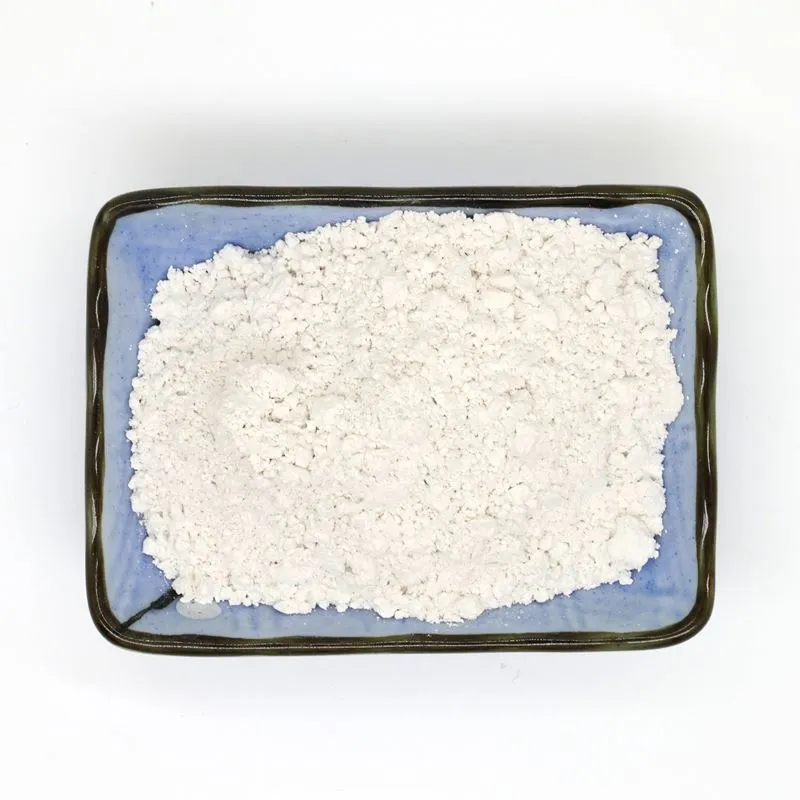
Calcium carbonate is a white, fine crystalline powder with no odor or taste. It exists in two forms: amorphous and crystalline. In the crystalline form, it can be further classified into the orthorhombic system and the hexagonal system (anhydrous calcium carbonate is colorless orthorhombic crystal, and hexahydrate calcium carbonate is colorless monoclinic crystal). It is in the form of columns or rhombuses, with a density of 2.93 g/cm³. The melting point is 1339℃ (it decomposes at 825-896.6℃), and at 10.7 MPa, the melting point is 1289℃. It is almost insoluble in water, but it dissolves in water containing ammonium salts or iron(III) oxide. It is insoluble in alcohols.
According to the different production methods of calcium carbonate, it can be classified into heavy calcium carbonate, light calcium carbonate, colloidal calcium carbonate and crystalline calcium carbonate. Based on the average particle size (d) of calcium carbonate powder, it can be divided into micropowder calcium carbonate (d > 5 μm), ultrafine calcium carbonate (1 - 5 μm), ultrafine calcium carbonate (0.1 - 1 μm), superfine calcium carbonate (0.02 - 0.1 μm), and ultrafine calcium carbonate (d ≤ 0.02 μm). According to whether the arrangement of atoms and ions in calcium carbonate has a regular pattern, it can be classified into crystalline calcium carbonate and amorphous calcium carbonate. In addition, there is also nano calcium carbonate, etc.
Heavy calcium carbonate
Heavy calcium carbonate (commonly known as heavy lime) is obtained by directly crushing natural calcite, limestone, chalk, shells, etc. using mechanical methods (such as Raymond mill or other high-pressure mills). [6]
Lightweight calcium carbonate
Lightweight calcium carbonate (commonly known as light calcium), also known as precipitated calcium carbonate, is produced by calcining limestone and other raw materials to generate lime (mainly composed of calcium oxide) and carbon dioxide. Then, adding water to digest the lime to form lime milk (mainly composed of calcium hydroxide). Subsequently, introducing carbon dioxide into the lime milk to generate calcium carbonate precipitate. Finally, through dehydration, drying and grinding, it is obtained. Alternatively, a compound reaction of sodium carbonate and calcium chloride is used to form calcium carbonate precipitate first, and then it is processed through dehydration, drying and grinding to obtain it. [6]
Colloidal Calcium Carbonate
Colloidal calcium carbonate, also known as activated calcium carbonate, modified calcium carbonate, surface-treated calcium carbonate, gelled calcium carbonate, or white yanhua, is obtained by surface modification of lightweight calcium carbonate or heavy calcium carbonate with a surface modifier. Since the calcium carbonate modified by the surface modifier generally has reinforcing properties, namely the so-called "activity", it is customary to call the modified calcium carbonate active calcium carbonate.
Properties: Colloidal calcium carbonate is an extremely fine white powder, odorless and tasteless, with particles approximately spherical in shape, with a particle size of less than 0.1 um. Due to the adsorption of a layer of fatty soap on the particle surface, it has colloidal activation properties and is an excellent white reinforcing filler. It dissolves in water, decomposes when exposed to acid, turns black when burned, releases carbon dioxide and forms calcium oxide. Specific gravity is 1.99 - 2.01.
Crystalline calcium carbonate
When calcium hydroxide reacts with hydrochloric acid, calcium chloride is produced. After decolorization and purification with activated carbon, calcium chloride is carbonated with carbon dioxide in the presence of ammonia water to obtain calcium carbonate. Then, it undergoes crystallization, separation, washing, dehydration, drying, and screening to be produced.
Properties: Pure white, hexagonal crystalline powder. Specific gravity 1.2 - 1.4 milliliters per gram. Soluble in acids, almost insoluble in water. [6]
Usage: It is used in toothpaste, medicine, etc., and can also be used as an insulation material and for the production of other chemical raw materials.
Nano Calcium Carbonate
Nano calcium carbonate (ultrafine calcium carbonate) has a particle size ranging from 1 to 100 nm. It is a powder material developed in the 1980s. It is an excellent inorganic filler. When used in plastics, it has good affinity with the resin, which can effectively increase or regulate the rigidity, toughness, and bending strength of the material, and can improve the rheological properties of the plastic processing system, reduce the melting temperature, improve the dimensional stability, heat resistance, and surface smoothness of the products; in rubber systems such as NR, BR, and SBR, it is easy to be mixed and dispersed evenly, and can make the rubber soft, also improving the extrusion processing performance and model fluidity. This enables rubber products to have smooth surfaces, high elongation, high tensile strength, low permanent deformation, good bending performance, and high tear strength, etc. [9] Compared with ordinary calcium carbonate, nano calcium carbonate has a special crystal structure, surface electronic structure, and excellent quantum size effect and surface effect, and is widely used in fields such as chemistry, catalysis, optics, magnetism, and electricity [10]. However, nano calcium carbonate is prone to agglomeration and has a hydrophilic surface and hydrophobic oil surface, which limits its application in organisms.
|
Items |
Results |
|
Appearance |
White powder |
|
CaCO₃ (as dry basis) % |
99.4 |
|
105℃ volatile matter content % |
0.037 |
|
Magnesium carbonate % |
0.28 |
|
Aluminium oxide % |
0.26 |
|
Ferric oxide % |
0.004 |
|
Phosphorus pentoxide % |
Negative |
|
PH value |
9.8 |
|
Whiteness % |
97 |
Products Application
Laboratory application
1. In the "extracting pigments from green leaves" experiment, a small amount of calcium carbonate can be added during grinding to prevent the pigments from being damaged during the process. [16]
2. Calcium carbonate has applications in the production of CaO, Ca(OH)2, and NaOH: When calcium carbonate is heated at high temperatures, it decomposes to form calcium oxide and carbon dioxide. The reaction equation is: (The calcium oxide obtained from this reaction can be used as a drying agent). The prepared calcium oxide reacts with water to form calcium hydroxide: Calcium hydroxide can react with sodium carbonate to prepare caustic soda:
3. Calcium carbonate reacts with hydrochloric acid (generally dilute hydrochloric acid) to produce carbon dioxide: CaCO3 + 2HCl = CaCl2 + CO2↑ + H2O (The product of the hydrochloric acid solution can be standardized as soap solution) [4]
In addition, it can also be used to verify and determine halogens in organic compound reactions, water analysis, verification of phosphorus, decomposition of silicates using ammonium chloride, preparation of calcium chloride solution to standardize soap solution, etc.
Industrial applications
Calcium carbonate is a widely used valuable resource. The commercial name for limestone as a mineral raw material is limestone. Limestone has been widely used in human civilization due to its wide distribution in nature and ease of acquisition. As an important building material, it has a long mining history. In modern industry, limestone is the main raw material for manufacturing cement, lime, and calcium carbide, and is indispensable as a flux in the metallurgical industry. High-quality limestone, after ultrafine grinding, is widely used in the manufacturing of products such as papermaking, rubber, paint, coating, medicine, cosmetics, feed, sealing, bonding, and polishing. According to incomplete statistics, the ratio of limestone consumed in cement production and building materials, lime production, metallurgical flux, and ultrafine calcium carbonate consumption to limestone is 1:3. Limestone is a non-renewable resource. With the continuous advancement of science and technology and the development of nanotechnology, the application fields of limestone will be further expanded. [8]
1. For plastic production
Calcium carbonate is widely used in filling polyvinyl chloride (PVC), polyethylene (PE), polypropylene (PP), acrylonitrile butadiene styrene copolymer (ABS) and other resins. Adding calcium carbonate has a certain effect on improving certain properties of plastic products to expand their application range. In plastic processing, they can reduce resin shrinkage rate, improve flow behavior, control viscosity. It can also have the following effects:
(1) Improve the stability of the size of plastic products;
(2) Improve the hardness and rigidity of plastic products;
(3) Improve the processing performance of plastics;
(4) Improve the heat resistance of plastic products;
(5) Improve the light transmission property of plastics;
(6) Enable the products to have certain special properties;
(7) Reduce the cost of plastic products. [17]
2. For the food industry
It can be used as an additive in the food industry. For example, it can be used as various feed additives, with a calcium content of over 55.6%, without harmful components. It can be used as a calcium supplement, with an absorption rate of up to 39%, second only to fruit acid calcium. It can dissolve in gastric acid and has become the most diverse in form and most widely used calcium supplement. [6]
3. For the construction industry
It can be used as raw material for plastic factories, rubber factories, paint factories, and waterproof material factories, as well as for interior and exterior wall painting. It has the characteristics of high purity, high whiteness, non-toxicity, no odor, low oil content, and low hardness. Marble is also an important building material that can be used in house construction.
4. For the chemical manufacturing industry
350 mesh to 400 mesh can be used for manufacturing gusset plates, drainage pipes, and chemicals. The whiteness is above 93 degrees. 400 mesh to 600 mesh can be used for toothpaste paste and soap. The whiteness is above 94 degrees. 800 mesh can be used for rubber, cables, PVC, with a whiteness of above 94 degrees. [6]
It can also be used to manufacture optical neodymium glass raw materials, etc.
5. For fine ceramic materials
Calcium carbonate can be used to prepare ceramic materials with high temperature stability, dielectric properties, low thermal conductivity, micropores and high purity. For example, the white conductive material widely used in spark plugs, as well as important fine ceramic materials such as semiconductor materials, alumina and enamel pigments, etc.
6. As mineral fillers and abrasives
Industrial-grade calcium carbonate can also be used as mineral fillers and abrasives. In chemical and building material production, calcium carbonate can replace some expensive materials such as white lead ore, talc and talcum powder. In abrasives, the particle surface of calcium carbonate can interact with the abrasive matrix, enhancing the wear resistance and grinding efficiency of the abrasive, thereby improving the efficiency and durability of the abrasive.
7. For nutritional supplements
Most calcium supplements on the market are mainly composed of calcium carbonate. Calcium carbonate should be taken with meals [18]. Due to its carbonate content, calcium carbonate is prone to produce carbon dioxide in an acidic environment. For those with poor gastric acid secretion or using gastric acid inhibitors, it is not suitable to take.
Products Qualification








Hot Tags: calcium carbonate, China calcium carbonate manufacturers, suppliers