Products
Citric Acid Monohydrate 8-40 Mesh
video
Citric Acid Monohydrate 8-40 Mesh

Citric Acid Monohydrate 8-40 Mesh

Citric acid (CA), also known as citrate, has the chemical formula C₆H₈O₇. It is an important organic weak acid, presenting as colorless crystals, odorless, and soluble in water. The solution shows acidity. In biochemistry, it is an intermediate in the citric acid cycle (tricarboxylic acid cycle), which occurs in the metabolism of all aerobic organisms. Citric acid is widely used as an acidity regulator (GB2760—2014), flavoring agent, and chelating agent.

Products Description


Product name: Monohydrate of Citric acid
Chemical formula: C6H10O8
Molecular weight: 210.139
CAS number: 5949-29-1
Melting point: 135 to 152 ℃
Boiling point: 56 ℃
Density: 0.791 g/cm³

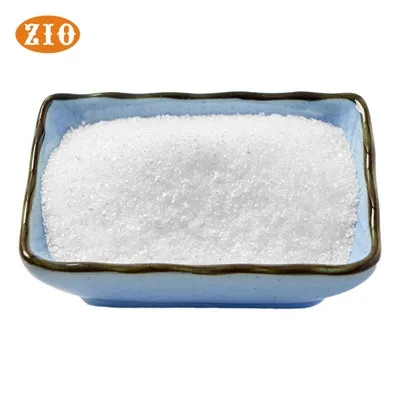
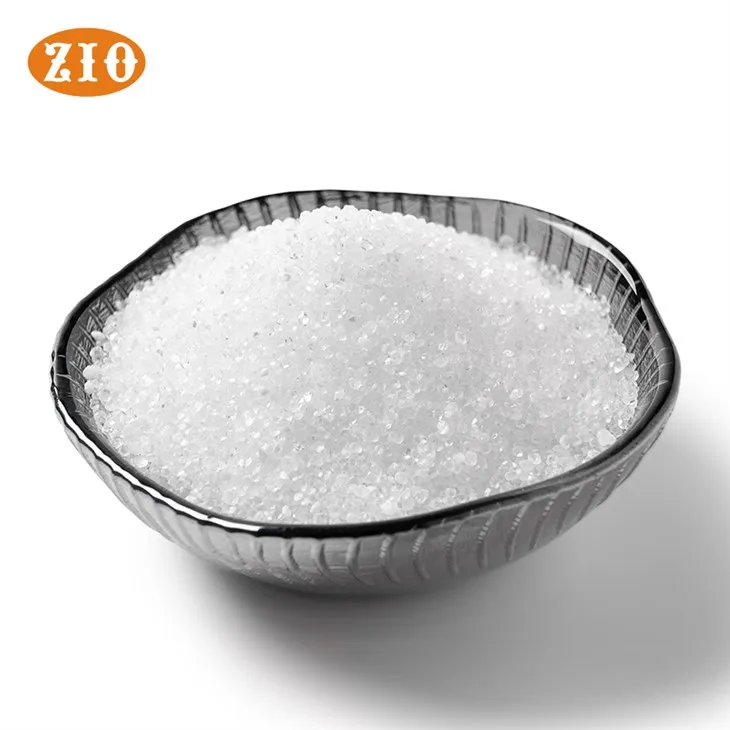
Colorless crystals or white crystalline powder.


Monohydrate citric acid (English name: Monohydrate citric acid) is a type of citric acid that contains one molecule of crystalline water. It is one of the two main forms of commercial citric acid, with the molecular formula of C6H8O7·H2O and a molecular weight of approximately 210.14. It is usually white, transparent or semi-transparent crystals, or granular or particulate powder, odorless, with a strong sour taste, followed by a slightly astringent taste; the content of crystalline water is 8.58%, with a melting point of 70-75℃, and a relative density of 1.542 at 20℃. When exposed to dry air for a long time, it will weather due to the escape of crystalline water; the crystal is a rhombohedral prism crystal, and the critical temperature for transforming into anhydrous citric acid is 36.6 ± 0.15℃. It is highly soluble in water and can be dissolved in ethanol, slightly soluble in ether, and insoluble in benzene, toluene, carbon disulfide, carbon tetrachloride, and fatty acids. It has a strong acidity and can react with many substances such as acids, bases, glycerol, salts, metal ions, etc. Heating can cause it to decompose into various products.
The production process of monohydrate citric acid in industry is as follows: First, the citric acid fermentation liquid is separated into solid and liquid to obtain citric acid clear liquid. Calcium salt method, acid hydrolysis method, and decolorization method are used to purify the clear liquid, and then through heating, concentration, and crystallization, anhydrous citric acid is obtained; then, the concentrated liquid separated from the anhydrous citric acid is repeatedly subjected to cooling crystallization, centrifugal separation, and drying to obtain monohydrate citric acid crystals. Monohydrate citric acid has a wide range of applications: It is used as an acid flavoring agent, seasoning agent, and preservative and preservation agent in the food and beverage industry; in the chemical field, it is used as an antioxidant, plasticizer, and key component of detergents; in the cosmetics industry, it is often used to adjust the acid-base balance of products and stabilize the formula; in the pharmaceutical field, it is often used as a pharmaceutical excipient.
Monohydrate citric acid has high safety: both adults and infants can completely decompose it; the US Food and Drug Administration (FDA) classifies it as a GRAS (Generally Recognized as Safe) edible substance, and China has no restrictions on its use in food. [6] However, it should be noted that due to its strong acidity, monohydrate citric acid can cause irritation to the eyes, skin, and respiratory tract.


Products Application


It is mainly used in the food and beverage industry as an acidulant, flavoring agent, preservative and preservative agent. It is also used in the chemical industry, cosmetics industry and cleaning industry as an antioxidant, plasticizer, detergent, etc.


Food Industry
Citric acid is the most widely produced organic acid through biochemical methods in the world. Citric acid and its salts are one of the pillar products in the fermentation industry and are mainly used in the food industry, such as ascorbic acid, emulsifier, buffer, antioxidant, deodorant, flavor enhancer, gelling agent, colorant, etc.
In terms of food additives, it is mainly used in refreshing beverages like carbonated drinks, fruit juices, and lactic acid beverages, as well as pickled products. The demand for citric acid varies with seasonal and climatic changes. Citric acid accounts for approximately two-thirds of the total consumption of ascorbic acid. In canned fruits, adding citric acid can maintain or improve the flavor of fruits and increase the acidity of fruits with lower acidity during canning (reducing the pH value), weakening the heat resistance of microorganisms and inhibiting their growth, preventing bacterial spoilage and damage in canned fruits with low acidity. In candies, adding citric acid as an ascorbic acid agent is easy to coordinate with the fruit flavor. In gel foods such as sauces and jellies, using citric acid can effectively reduce the negative charge of pectin, allowing hydrogen bonds between pectin molecules to form a gel. When processing canned vegetable products, some vegetables have a basic reaction, using citric acid as a pH adjuster not only has a flavoring effect but also can maintain their quality. The chelating and pH-regulating properties of citric acid make it possible to increase the antioxidant performance in frozen food processing, inhibit enzyme activity, and extend the shelf life of food.
Metal Cleaning
Citric acid is an organic acid produced through microbial fermentation and is widely used in detergent production. Its own specificity and chelating effect play a positive role. In actual use, citric acid has good performance, mainly in terms of safety, as the raw materials for preparing citric acid are all derived from grains, which is a safe food-grade microorganism. The use of citric acid does not affect the environment, and it is relatively easy to degrade under the action of microorganisms and heat, with strong chelating ability. Mainly because citrate has strong chelating ability for manganese ions and iron ions, and the use effect is also very prominent. The corrosion inhibition performance of citric acid in detergent use is also prominent. Acid washing, as an important part of chemical cleaning, is relatively important compared to inorganic acids. Citric acid has a relatively weak acidity, so the corrosion to equipment is relatively small. The safety and reliability of citric acid cleaning are strong, and the waste liquid is relatively easy to handle, which does not pose a hazard to the human body [24].
(1) Mechanism of Citric Acid Cleaning
Citric acid has low corrosion to metals and is a safe cleaning agent. Since citric acid does not contain Cl-, it will not cause stress corrosion of equipment. It can complex Fe3+ and weaken the promoting effect of Fe3+ on corrosion.
Citric acid can dissolve iron oxide and copper oxide, generating citric iron and copper complexes. If using ammonia-activated citric acid solution, it can generate very soluble citric iron-ammonium and citric ferric complexes, with excellent cleaning effect. Citric acid mainly removes rust, so it is mainly used for cleaning new boilers. Citric acid can be mixed with aminosulfonic acid, hydroxyacetic acid, or formic acid to clean calcium and magnesium scale and rust in boilers. Citric acid can be mixed with ethylenediaminetetraacetic acid (EDTA) to clean superheaters.
Citric acid and its derivatives have very broad applications in many fields such as chemical cleaning.
(2) Cleaning Pipes with Citric Acid
This is the latest cleaning technology for high-impurity hard water. It uses food-grade citric acid to soften stubborn scale, and then uses a microcomputer-controlled water flow and pneumatic action to generate water flow oscillation, causing the accumulated scale in the pipes to peel off and become clean.
(3) Re-combined Surfactant Cleaning Gas Water Heaters The chemical cleaning agent prepared with citric acid, AES and benzothiazole was used to clean the gas water heater that had been in use for many years. The cleaning agent was injected into the inverted water heater and left to soak for 1 hour. Then the cleaning liquid was drained and the water heater was rinsed with clean water. After that, it was reused. Under the same flow rate, the water temperature increased by 5℃ to 8℃ compared to before the cleaning.
(4) Cleaning the water dispenser
Use edible citric acid (powder form) diluted with water to inject into the heating inner tank of the water dispenser. Let it soak for about 20 minutes. Finally, rinse the inner tank with clean water repeatedly until it is clean. It is non-toxic and has a good effect.
Fine chemical field
Citric acid belongs to one type of fruit acid and can accelerate the renewal of keratin. It is often used in emulsions, creams, shampoos, whitening products, anti-aging products, acne products, etc. Citric acid can be used as an experimental reagent, chromatographic analysis reagent and biochemical reagent in chemical technology; it can be used as a complexing agent and masking agent; it can be used to prepare buffer solutions. Using citric acid or its salts as a detergent can improve the performance of cleaning products, quickly precipitate metal ions, prevent contaminants from re-attaching to the fabric, maintain the necessary alkalinity for cleaning; disperse and suspend dirt and dust; improve the performance of surfactants, and is an excellent chelating agent; it can be used as a test reagent for the acid resistance of building ceramic tiles. Citric acid-sodium citrate buffer is used for sulfur dioxide removal in flue gas. The citric acid-sodium citrate buffer solution, due to its low vapor pressure, non-toxic, stable chemical properties, and high absorption rate of SO2, etc., is a highly valuable desulfurization absorption agent.
Citric acid can be used as a formaldehyde-free dyeing and finishing agent to improve the wearing performance of fabrics or give fabrics water-repellent and oil-repellent properties.
Citrate esters, which have been approved by the US Food and Drug Administration as non-toxic plasticizers for polyvinyl chloride and cellulose plastic films used in food packaging. Acetylated and butyrylated citrate esters can be used as foaming agents for methyl methacrylate polymers, stabilizers for acrylamide, initiators for polyamide adhesives, and plasticizers for polyvinyl chloride. In particular, butyrylated citrate and acetylated citrate tributyl esters are recognized as non-toxic plasticizers. In addition to being non-toxic, they have superior properties in compatibility, extractability resistance, and low volatility. For example, acetylated citrate trihexyl ester and butyrylated citrate tributyl ester can be used to produce components such as blood vessels and catheters with high hygiene requirements.
Bactericidal and coagulation process
The combination of citric acid and 80 ℃ temperature has a good bactericidal effect on spores and can effectively kill the spores of bacteria in the blood dialysis machine pipeline. In the formation of prothrombin activator and the subsequent coagulation process, calcium ions must participate. Citrate ions can form a difficult-to-dissociate soluble complex with calcium ions, thereby reducing the concentration of calcium ions in the blood and blocking blood coagulation.
Animal breeding
Citric acid is formed in the tricarboxylic acid cycle of the body from acetyl coenzyme A and oxaloacetic acid through condensation. It participates in the metabolism of sugar, fat and protein in the body. Natural citric acid is found in the fruits of plants (such as lemon, orange, pineapple, etc.) and in the bones, muscles and blood of animals. Artificial synthesis is obtained through fermentation of sugar substances such as sugar cane, molasses, starch, grapes, etc. Adding citric acid to the compound feed can disinfect, prevent mold, and prevent Salmonella and other infections of animal feed. Animals consuming citric acid can reduce the proliferation of pathogens and inhibit the production of toxic metabolites, improving the animal's stress resistance.
(1) Increase feed intake and promote digestion and absorption of nutrients
Adding citric acid to the daily diet of livestock can directly stimulate the taste buds cells in the mouth, increase saliva secretion, play a role as a flavoring agent, enhance animal appetite, and thereby increase the animal's feed intake. Adding citric acid to the diet can lower the pH of the feed, and after the animals consume it, the acidity in the stomach increases, inactive pepsinogen is converted into active pepsin, or directly stimulates the secretion of digestive enzymes; Additionally, when acidic chyme enters the small intestine, it stimulates the secretion of intestinal inhibitory gastrin, which reflexively inhibits gastric peristalsis, delays the gastric emptying time, prolongs the time for chyme to pass through the intestinal tract, and promotes the digestion of nutrients.
(2) Promote intestinal flora health
Organic acids can enter the cell walls of bacteria, causing pH gradient changes both inside and outside the bacteria, thereby inhibiting bacterial growth. Commonly, the pH suitable for the growth of several pathogenic bacteria is neutral to slightly alkaline, such as Escherichia coli with an optimal pH of 6.0-8.0, Streptococcus with 6.0-7.5, while lactic acid bacteria and other probiotics thrive in acidic environments. Citric acid lowers the pH in the gastrointestinal tract, providing favorable growth conditions for probiotics like lactobacilli in the intestinal tract, thereby maintaining the normal balance of microflora in the digestive tract of livestock and poultry.
(3) Enhance the body's stress resistance and immune capacity
Immune-active cells, namely T lymphocytes and B lymphocytes, play an immune surveillance role in the body. Studies have shown that feeding meat chickens with citric acid can increase the density of immune-active cells, keeping the chickens in a better immune state, and inhibiting the reproduction of intestinal pathogenic bacteria and preventing the occurrence of infectious diseases.
(4) Use as a mold inhibitor and antioxidant
Citric acid is a natural preservative. Because it can lower the pH of the feed, the proliferation of harmful microorganisms and the production of toxins are inhibited, resulting in a significant mold prevention effect. As an enhancer of antioxidant synergists, mixing citric acid with antioxidants can improve the antioxidant effect, prevent or delay feed oxidation, improve the stability of formulated feed and extend the storage period.


Products Details


product-800-800

20

7

1

4


Products Qualification


1-25

2-25-tic

4-tic

5

7-2-tic

8

9

10

11-tic

12

Hot Tags: citric acid monohydrate 8-40 mesh, China citric acid monohydrate 8-40 mesh manufacturers, suppliers

Send Inquiry