

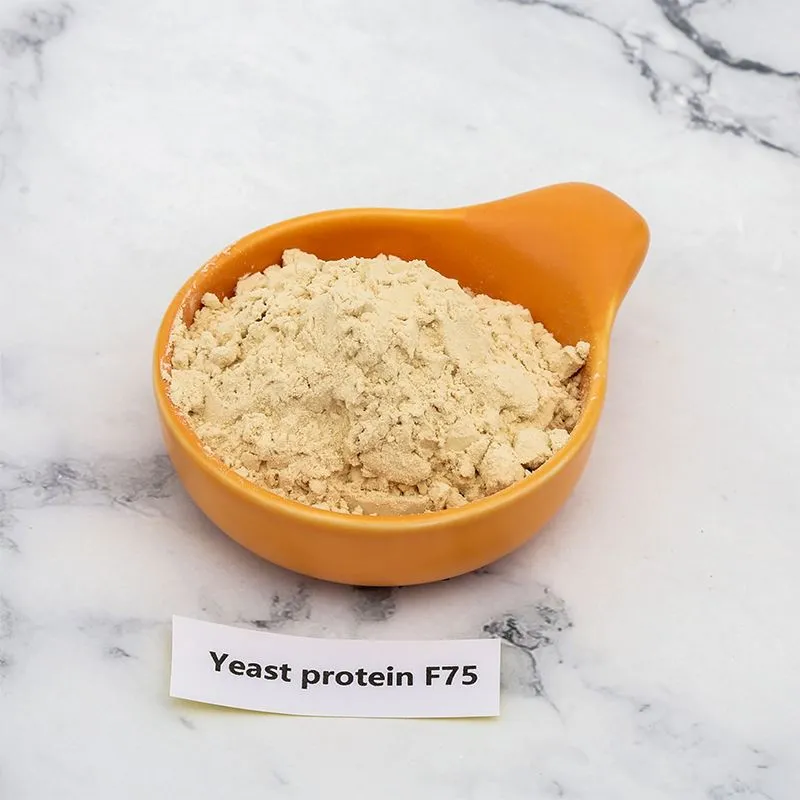


Products Description
The application of yeast is more extensive. For example, when making steamed buns and bread, we use it to leaven the dough. The beer we drink is also fermented by yeast. It can also be made into yeast tablets for treating indigestion. Over the years, extensive and in-depth research on yeast in various aspects such as cytology, genetics, ecology, nutrition and physiology, as well as modern molecular biology, has enabled yeast to play an increasingly important role in industries such as brewing, food, pharmaceuticals and enzyme preparations.
Products Advantage
Protein source friendly
5,000 years ago, humans began to use yeast fermentation to make bread and brew beer. Nowadays, yeast has been widely applied in food, biobusiness, biotechnology, and medical health fields, being the most widely used microorganism at present. Its annual usage has exceeded millions of tons. The protein content in yeast protein is as high as over 80%, and the protein utilization rate can reach 96%, almost exceeding that of all plant proteins. It contains the 8 essential amino acids required by the human body, accounting for 47% of the total amino acids, which is higher than the 46% of whey protein and far exceeds the 35%-40% of plant proteins.
It has also been found through research that compared with plant proteins and whey proteins, yeast protein has the best foam stability and higher emulsifying performance, with the lowest apparent viscosity. This characteristic makes it highly suitable for applications in meat products and dairy product processing. [6]
Environmentally friendly protein source
In recent years, as global consumers' demand for health has been increasing and the imbalance in food and protein supply has occurred, protein substitution has become an important issue in the food industry. Yeast protein provides an excellent solution for the food industry and has been applied in various scenarios such as energy bars, artificial meat, and frozen beverages.
According to statistics from the Food and Agriculture Organization of the United Nations and the World Resources Institute, the carbon dioxide emissions from livestock farming, including cattle breeding, currently account for approximately 15% of global carbon emissions. The greenhouse gases emitted during the production of one kilogram of animal protein for food production are significantly higher than those produced by plant protein. The unit carbon emission per kilogram of beef is particularly "leading", reaching an astonishing 250 kg.
As a microbial source, yeast protein has obvious advantages in production and manufacturing. Firstly, the production efficiency of yeast protein is higher. When converting the same weight of protein, growing wheat or raising dairy cows takes several months, while through yeast cultivation, it only takes hours, making it a more efficient protein source.
Secondly, yeast protein has significant advantages in reducing carbon emissions, saving arable land and freshwater resources. It is a green, safe and efficient protein. In terms of carbon emissions, yeast protein is approximately 1/20 of animal protein and close to plant protein; in terms of water consumption, yeast protein is approximately 1/200 of animal protein and 1/10 of plant protein; and in terms of land area, yeast protein is approximately 1/100 of animal protein and 1/10 of plant protein.
China has solemnly promised the world that "carbon peak before 2030 and carbon neutrality before 2060". All industries should actively assume this responsibility. Anqi Yeast, as the leading company in the yeast industry and the undertaking unit of the key research and development project "Key Technology Research and Application Development of Yeast Protein", has unprecedentedly brought yeast protein, a microbial protein, onto people's dining tables, which is a powerful practice of reducing carbon emissions. Therefore, "Research and Application of Yeast Protein" was selected as one of the "Top Ten Progresses in Chinese Food Technology in 2022".
With the continuous strengthening of global issues such as climate crisis and population expansion, the public's sense of threat to sustainable development, food supply and human health is increasing day by day. As an important part of the food system, the protein production system is being reshaped. The National Health Commission's approval of yeast protein as a new food raw material marks recognition of this emerging protein and means that "relying on microorganisms to obtain calories and protein" is not just a simple slogan.
In addition, yeast protein is a non-animal source protein. It shows more obvious advantages than animal and plant proteins in resisting viral infections, allergies, antibiotic residues, genetic risks, and religious taboos.
Products Fuction
Better balance intestinal nutrition
Protein is the fundamental substance of life and its importance to the body is self-evident. However, compared with the amount of protein consumed daily, the quality of protein should be given more attention.
The International Food and Agriculture Organization (FAO) has a protein quality evaluation standard called "Digestible Indispensable Amino Acid Score" (DIAAS). According to this scoring system, milk, boiled eggs, beef, and chicken breast contain a large amount of essential amino acids for the human body and are very easy to be digested, belonging to high-quality protein; soybeans or peas made protein powder belong to medium-quality protein; while the proteins in rice, lentils, rye, peanuts, almonds, and wheat belong to inferior protein. The DIAAS of yeast is 0.95, close to whey protein, superior to soy protein, and belongs to high-quality protein.
Animal experiments have shown that yeast protein can significantly improve the deterioration of intestinal histology and function caused by aging: it is conducive to maintaining the intestinal epithelial barrier, promoting the absorption of nutrients, improving intestinal immunity, anti-inflammatory and antioxidant capabilities; in addition, it can promote the proliferation of beneficial intestinal bacteria (such as Acinetobacter and Prevotella), and promote the metabolism of body fat. [6]
Help to cope with sarcopenia
Skeletal muscle is the power of the human movement system. The aging and atrophy of muscles are important indicators of human aging, and they are very likely to cause fractures and joint injuries. Generally, from the age of 40, skeletal muscle begins to age, and its quantity and quality decrease by about 8% on average each year. Branched chain amino acids (BCAA) are the collective term for three essential amino acids: leucine, valine, and isoleucine. Studies have shown that they have a direct promoting effect on the growth and repair of skeletal muscle. Supplementing branched chain amino acids can effectively prevent or delay the occurrence of sarcopenia.
Yeast protein is rich in branched chain amino acids, which makes it an indispensable choice for coping with sarcopenia. Anqi Yeast led a study that used yeast protein, whey protein, and placebo in an 8-week randomized, double-blind, controlled trial to evaluate the effects of different proteins on the increase in muscle mass and strength in healthy adults over 40 years old. The trial project involved 79 people, of whom 28 took placebo, 27 took yeast protein, and 24 took whey protein. During this period, the subjects performed certain standard low-impact cardiovascular function-impacting exercises weekly. The results showed that all groups of subjects had improvements in muscle mass, strength, and endurance, but the increase in muscle mass, strength, and endurance of the subjects in the yeast protein and whey protein groups was significantly higher than that of the placebo group, and the performance of the yeast protein group and the whey protein group was similar.
Products Application
Yeast protein energy bars
More technologically advanced innovation
Among the latest star products launched by the well-known brand FFIT8, yeast protein has been used to replace some of the whey protein. The founder, Mr. Zhang Guangming, said: The product cost and taste have been significantly optimized!
It is known that using yeast protein in energy bar products has more advantages. The essential amino acids in yeast protein are high in content, well distributed, and have a high biological value, which is significantly superior to plant protein. At the same time, yeast protein is a slow-digesting protein that can prolong satiety and is suitable for fitness or people with specific needs to consume. At the same time, the total protein content of yeast protein is high, making it very suitable for the high-protein requirements of energy bars, and its moisture content is only 2%, with a longer storage period and less prone to microbial contamination. [6]
Yeast protein artificial meat
More realistic meat texture
In the artificial meat field with great prospects in the international market, yeast protein has obvious advantages over commonly used soy protein.
Yeast protein has higher production efficiency and energy conversion rate, and its preparation process is more mature, with a reasonable amino acid ratio and higher nutritional value. Due to the targeted characteristics of yeast protein as a flavor presentation substance, it can be precisely analyzed and precisely regulated in the production process, effectively enhancing the meat texture of artificial meat products and improving the meat flavor.
At the same time, yeast protein can effectively mask the soy smell in artificial meat products, making the taste more mellow and protecting the shape of artificial meat products. [6]
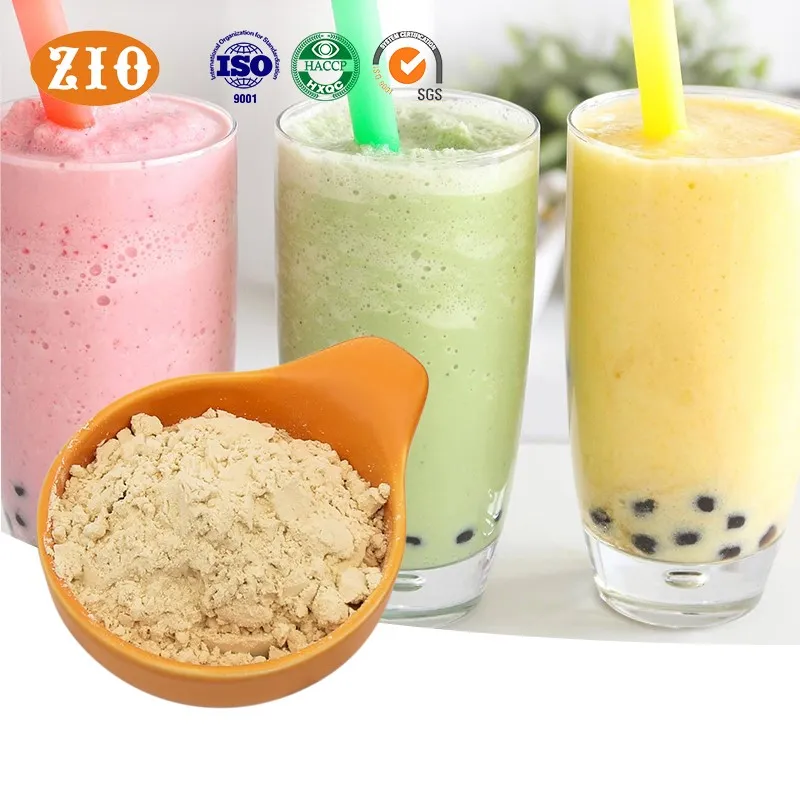
Yeast protein frozen beverages
Steady smoothness
Traditional plant protein beverages are limited by factors such as raw materials and processing techniques, and often cannot launch terminal products with high protein selling points. After adding whey protein to increase protein content, however, it will bring the problem of high costs.
Yeast protein fully meets the high-protein requirements of plant-based foods and is very suitable for preparing high-protein plant-based foods, with high cost performance. At the same time, the gel performance of yeast protein is better than that of whey protein, and it can replace part of the whey protein in frozen beverages to increase product viscosity, emulsification stability and expansion rate, effectively reducing melting rate, and bringing a smoother and softer taste to the product.
Products Details
Products Qualification





Hot Tags: yeast protein, China yeast protein manufacturers, suppliers