



Products Description
Density: 2.181 g/cm³
Melting point: 616℃
Refractive index: 1.482
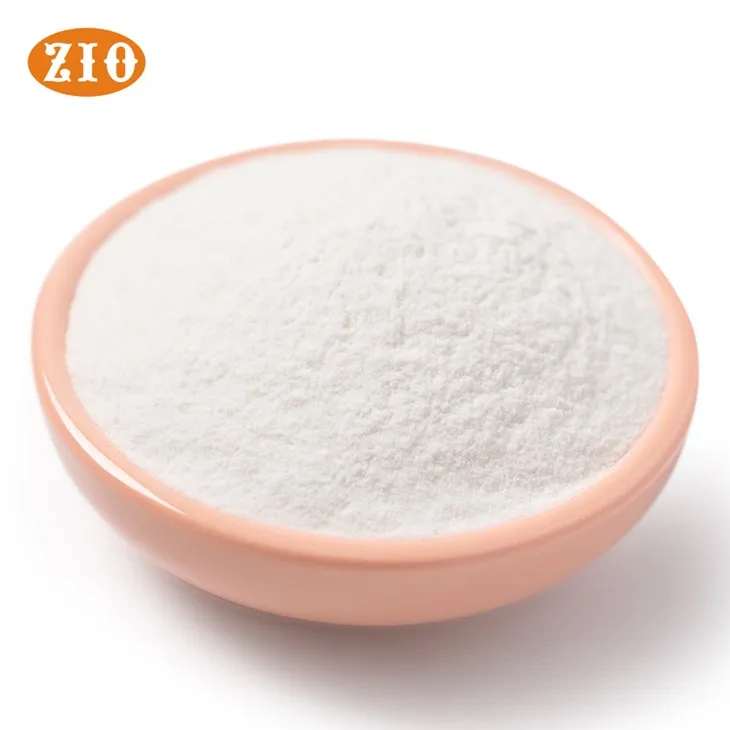
Appearance: White crystalline powder
Solubility: Easily soluble in water, insoluble in organic solvents
Chemical properties:
The degree of polymerization of Graham salts increases due to the increase in dehydration temperature and the low water vapor pressure in the reaction system (to control the OH at both ends of the chain-like phosphate). For example, when sodium tripolyphosphate is heated at 923K and P(H₂O) = 7.33 kPa and then rapidly cooled, the average degree of polymerization n of the product is 60. The average degree of polymerization of freshly prepared Graham salts is 100-125, and it also contains cyclic (PO₃)ₙ⁻, where hexa-sodium phosphate only accounts for 0.5%. [3]
Glassy phosphate is soluble in water and can form corresponding precipitates with Ag+ and Pb2+, but it forms stable complex ions with Ca2+. Therefore, it is used as a water treatment agent for calcium removal in industry. The reagent used for calcium removal contains 67.8% P2O5, equivalent to Na2O:P2O5 ratio of 1.1:1 (molar ratio), with a molecular weight of 1500-2000 and an average degree of polymerization n = 15-20. [3]
At room temperature, polyphosphates are relatively stable in neutral solutions. However, in acidic media and under heating conditions, the hydrolysis process accelerates, with the hydrolysis reaction proceeding by breaking off the terminal PO4 groups one by one. The acid salts of polyphosphates, [Na2H(PO3)3] and [Na3H(PO3)4], have also been synthesized.
| Item | Standard |
| Appearance | white powder |
| Total Phosphate (as P2O5 ) % | ≥68 |
| Inactive Phosphate (as P2O5) % | ≤7.5 |
| Water Insoluble % | ≤0.6 |
| Heavy metal (Pb) % | ≤0.001 |
| Arsenic(As) % | ≤0.0003 |
| Iron(Fe) % | ≤0.05 |
| Fluoride (as F) % | ≤0.003 |
| PH (1% aqueous solution) | 5.8-6.5 |
| Melting point | 616°C |
| boiling point | 1500 °C |
Hexametaphosphate sodium can be produced by melting pentoxide of phosphorus with soda ash at high temperature and then rapidly cooling it. Alternatively, it can be obtained by heating sodium dihydrogen phosphate after removing its crystalline water . Hexametaphosphate sodium can be used as a color developer solution , boiler water and softening agent for dyeing baths, and can also be used as a paper diffusion agent, detergent additive, control or anti-corrosion agent, cement hardening promoter, streptomycin purifying agent, etc. In the pharmaceutical industry, it can be used as a sedative; in the petroleum industry, it can be used for rust prevention of drilling pipes and to control the viscosity of mud during oil drilling; in the food industry, it can be used as a quality improver, pH regulator, metal ion chelator, adhesive, expansion agent, etc.; moreover, it also has certain applications in tanning, soil analysis, radiochemistry and analytical chemistry.
Sodium hexametaphosphate is dissolved in water to form sodium phosphate, which combines with tissues to form compounds of albumin, causing the body's fats to saponify and the tissues to gel and become soluble compounds. This causes deeper damage to the tissues and leads to pain. Free hexametaphosphate dust has a stimulating effect on the mucous membranes of the eyes, nose, mouth, and respiratory tract. Inhalation can cause symptoms of tracheitis and bronchitis, and splashing into the eyes can cause conjunctival congestion and conjunctivitis. Accidental ingestion can cause digestive tract burns, mucosal erosion, and bleeding.
Products Application
1. It is mainly used in the food and industrial sectors. The main applications in the food sector are:
(1) Sodium hexametaphosphate is used in meat products, fish meat sausages, ham, etc., which can enhance water retention, increase cohesiveness, and prevent fat oxidation;
(2) It is used in bean paste, soy sauce, which can prevent discoloration, increase viscosity, shorten the fermentation period, and adjust the taste;
(3) It is used in fruit beverages, cold drinks, which can increase juice yield, increase viscosity, and inhibit the decomposition of vitamin C;
(4) It is used in ice cream to enhance expansion ability, increase volume, enhance emulsification to prevent the destruction of the paste, and improve taste and color;
(5) It is used in dairy products and beverages to prevent gel precipitation;
(6) When added to beer, it can clarify the liquid and prevent turbidity;
(7) It is used in canned beans, fruits and vegetables, which can stabilize natural pigments and protect the food color;
(8) The aqueous solution of sodium hexametaphosphate sprayed on cured meat can improve the anti-corrosion performance.
2. In the industrial sector, it is mainly used as follows:
(1) Sodium hexametaphosphate can be heated with sodium fluoride to produce monofluorophosphate, which is an important industrial raw material;
(2) Sodium hexametaphosphate is used as a softener, such as in dyeing and finishing, to achieve the softening effect;
(3) Sodium hexametaphosphate is also widely used as a scale inhibitor in water treatment industries such as EDI (resin electrodialysis), RO (reverse osmosis), and NF (nanofiltration).
Products Qualification







Hot Tags: sodium hexametaphosphate, China sodium hexametaphosphate manufacturers, suppliers