



Products Description
Name: Sodium Gluconate
Foreign name: Gluconic acid, sodium salt
Alternative name: D-glucaric acid sodium salt
Chemical formula: C6H11NaO7
Molecular weight: 218.14
CAS number: 527-07-1
EINECS number: 208-407-7
Melting point: 206 ℃
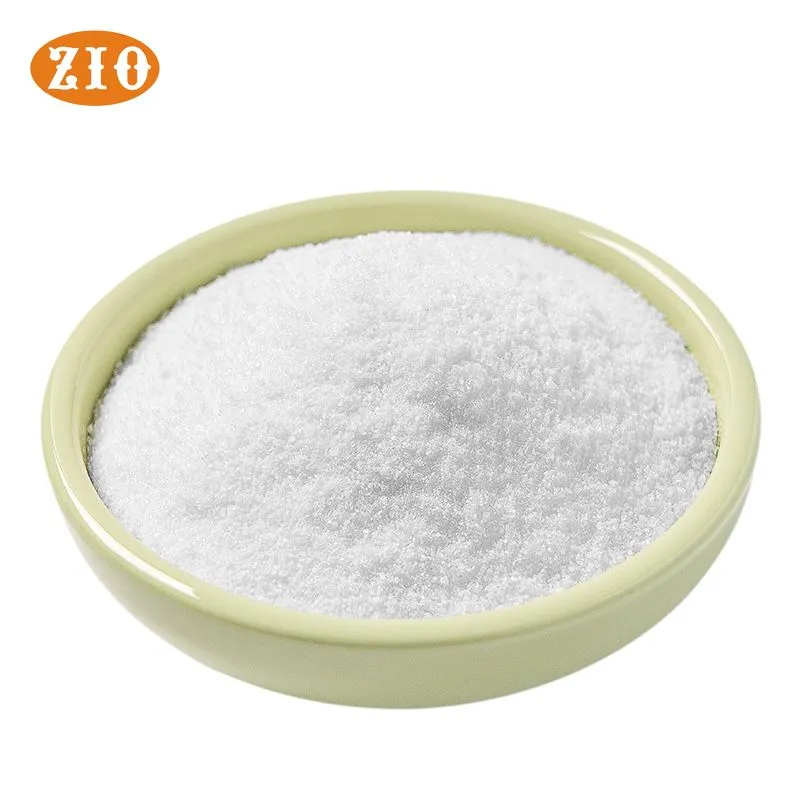
Appearance: White crystalline particles or powder
Applications: Water reducer, retarder, etc.
Chinese alternative name: D-glucaric acid sodium salt
Melting point: 206 - 209 ℃
Solubility:It is highly soluble in water, slightly soluble in alcohol, and insoluble in ether.
Products Application
As a steel surface cleaning agent:
When steel surfaces need to be plated with copper, chromium, tin, or nickel to meet specific requirements, such as for manufacturing tinplate, galvanized sheets, or surface chromium plating (electrically), the surface of the steel billets must undergo strict cleaning to ensure a firm bond between the coating and the steel surface. At this time, adding glucose acid sodium to the cleaning agent will achieve an extremely ideal effect. This has been confirmed by major companies in the world that produce tinplate.
As a cement admixture:
When a certain amount of glucose acid sodium is added to cement, it can increase the plasticity and strength of concrete, and has a delaying effect. That is, it delays the initial and final setting periods of concrete. For example, adding 0.15% glucose acid sodium can extend the initial setting time of concrete by more than ten times, that is, extending the plastic time of concrete from a few hours to several days without affecting its strength. Plasticity and delaying the initial setting time are very important issues in concrete operations. For example, in hot weather construction and large-scale engineering operations, delaying the initial setting time is a difficult problem. Glucose acid sodium can perfectly solve this problem. In addition, it is difficult to bond oil wells at high temperatures. After adding glucose acid sodium, concrete can be plastic within a few hours at 170°C. Therefore, it can also perfectly solve the above problem. Therefore, glucose acid sodium has been widely used as a cement admixture in important construction projects abroad, such as in a large number of bridge projects in the Middle East. However, in China, its application in this aspect has not yet been widely promoted. It is said that in the wastewater of papermaking, cellulose sulfonic acid sodium is extracted, and its effect is fundamentally incomparable with glucose acid sodium.
It can also be applied in electroplating and film manufacturing industries.
As an excellent corrosion inhibitor and scale inhibitor of the multi-hydroxy carboxylic acid type, glucose acid sodium has many specific properties as mentioned above. If efforts can be made in application technology, it will surely be developed into a large industry.
The Application of Sodium Gluconate in the Construction Industry
Concrete is a composite material made from cement, aggregates, admixtures and water. Concrete is the largest quantity of all artificially manufactured materials. Three quarters of concrete is aggregates, yet the most active component in concrete is the cement paste. The properties and performance of concrete are mainly determined by the properties of the cement paste. Admixtures in concrete can provide some beneficial effects such as accelerating setting, delaying setting, allowing air to exist in bubble form, reducing water usage and increasing plasticity, etc. Usually, several types of admixtures are used in cement, and various different admixtures can reinforce each other in some applications.
Sodium gluconate can be used as an admixture in concrete. Its functions in concrete are as follows: water reducer and retarder.
Sodium gluconate is generally used alone, but it can also be combined with other retarders such as carbohydrates and phosphates. Sodium gluconate is a crystalline powder. It is produced under properly regulated and controlled conditions. This compound is chemically pure and non-corrosive. The quality is constant. These characteristics can ensure reliable and repeatable results in its application.
Sodium gluconate as a water reducer
By adding a water reducer, the water-cement ratio (W/C) can be reduced. By adding sodium gluconate, the following effects can be achieved: 1. Improving workability. At a constant water-cement ratio (W/C), adding sodium gluconate can improve workability. At this time, sodium gluconate acts as a plasticizer. When the addition amount of sodium gluconate is below 0.1%, the degree of improvement in workability is proportional to the addition amount. 2. Improving strength. When the cement content remains unchanged and the water content in the concrete can be reduced (i.e., W/C decreases). When the addition amount of sodium gluconate is 0.1%, the water usage can be reduced by 10%. 3. Reducing cement content. The water and cement content decrease in proportion, while the W/C ratio remains unchanged.
Sodium gluconate as a retarder
Sodium gluconate can significantly delay the setting time of concrete. When the dosage is below 0.15%, the logarithm of the initial setting time is proportional to the dosage added, that is, when the dosage is doubled, the initial setting time is delayed to ten times, which enables the working time to be extended from a few hours to several days without affecting the strength. This is an important advantage especially in hot weather and when there is a need for a longer placement time.
As a cleaning agent for glass bottles
In the beverage industry, food industry, and brewing industry, billions of glass bottles such as soda bottles, beer bottles, milk bottles, canned food bottles, soy sauce bottles, wine bottles, etc. have a cleaning process that is very important. The formulation of the cleaning agent is a difficult technical task. There is no relatively ideal agent in China. The main problems are: poor cleaning power, easy blockage of the nozzles and pipelines of the washing machine; poor rust removal effect on bottle labels and bottle necks; the residual substances after washing are not ideal for food safety (such as phosphate residues); the discharge of washing water becomes a public nuisance (does not meet the standards stipulated by the state). If sodium gluconate is used as the main body in the formulation of the cleaning agent for glass bottles, all these problems can be solved. (Large-scale experiments have been conducted in Shanghai soda factory and Shanghai beer factory in the 1980s, and the identification has proved it. This application in China has not been developed yet, and if it forms a market, the potential is very large.)
As a water quality stabilizer
Because sodium gluconate has excellent corrosion inhibition and scale inhibition effects, it is widely used as a water quality stabilizer, such as as a treatment agent for circulating cooling water systems in petrochemical enterprises, low-pressure boilers, and internal combustion engine cooling water systems. It has the following specific advantages: ⑴ It has a significant coordination effect. It is suitable for formulations of molybdenum, silicon, phosphorus, tungsten, nitrite, etc., due to the coordination effect, the corrosion inhibition effect is greatly improved. ⑵ The corrosion inhibition rate increases with temperature rise. Generally, corrosion inhibitors' corrosion inhibition rate decreases as the temperature rises, and they may even lose their effect completely. However, sodium gluconate is the opposite. Its corrosion inhibition rate increases within a certain range as the temperature rises. For example, in tests on materials such as carbon steel, when the temperature rises from 77°F to 120°F, the corrosion inhibition rate increases by an average of more than 5%. Therefore, this peculiar property of sodium gluconate makes it ideal for use as a corrosion inhibitor in systems with higher temperatures or temperature changes from low to high. ⑶ Strong scale inhibition ability: It has a strong complexing ability with calcium, magnesium, and iron salts, so its scale inhibition ability is very strong. Especially for Fe3+, it has an excellent chelation effect, and it is effective even within the entire pH range. ⑷ Pollution elimination. Using sodium gluconate as a corrosion inhibitor and scale inhibitor for circulating cooling water can eliminate pollution. This is an advantage that cannot be compared with other corrosion inhibitor and scale inhibitor agents used.
Used in the pharmaceutical field
Regulating the acid-base balance in the human body to restore normal nerve function, and it can also be used as a food additive for the same purpose.
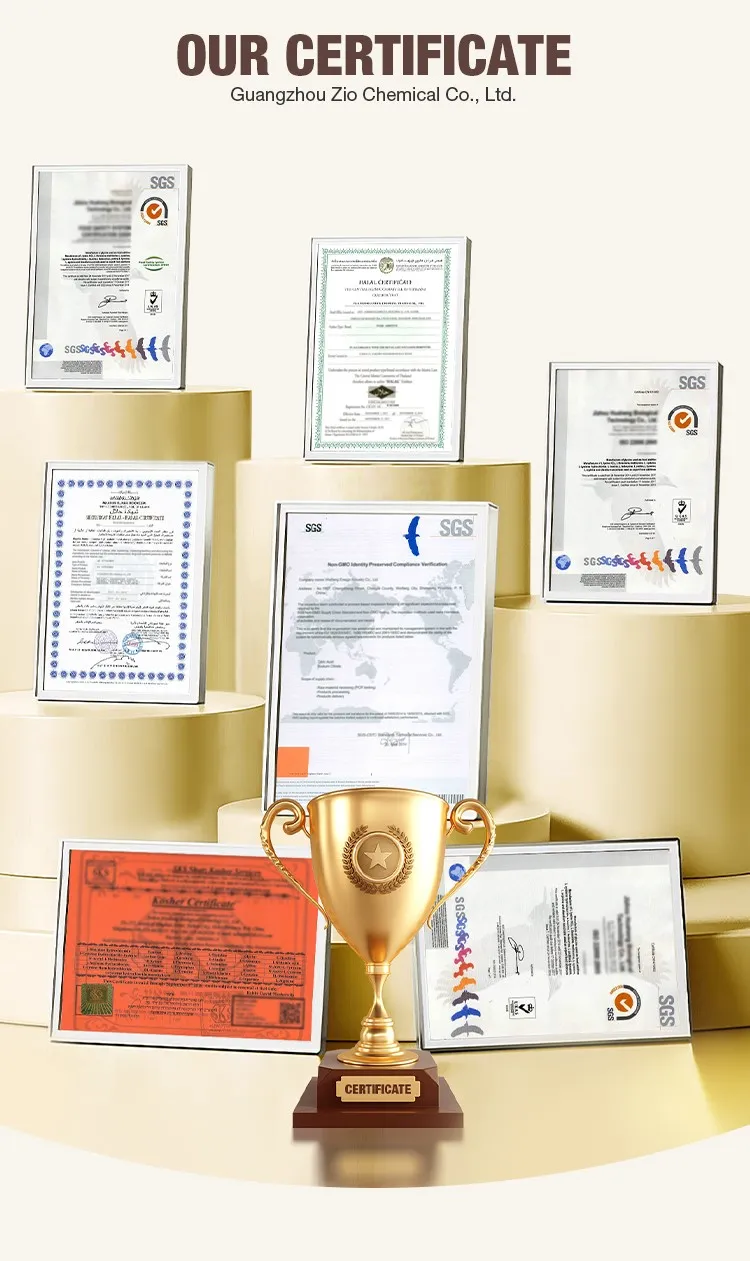
Products Qualification


Hot Tags: sodium gluconate, China sodium gluconate manufacturers, suppliers