



Products Description
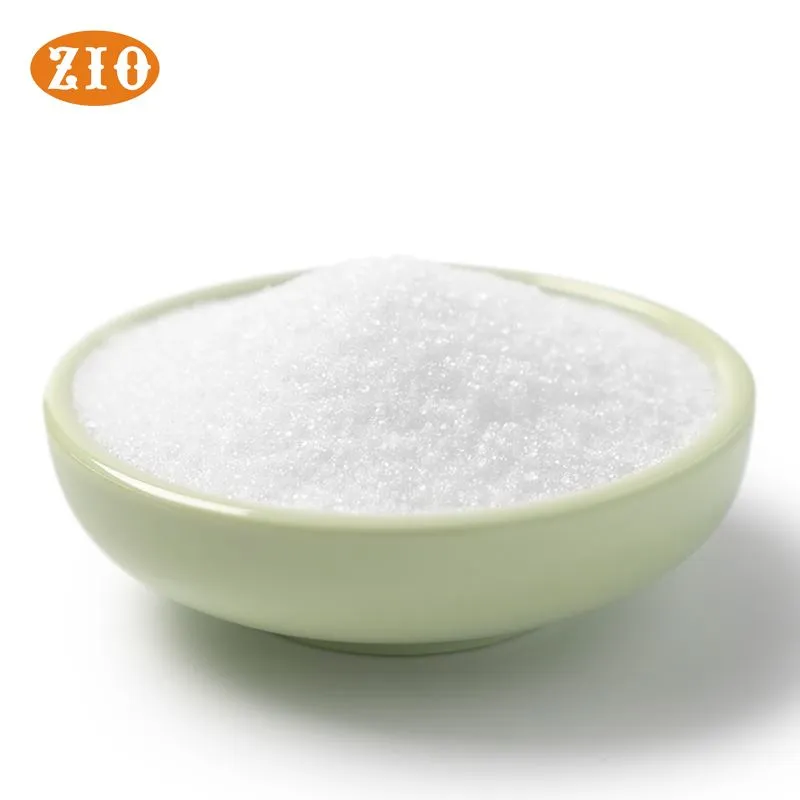
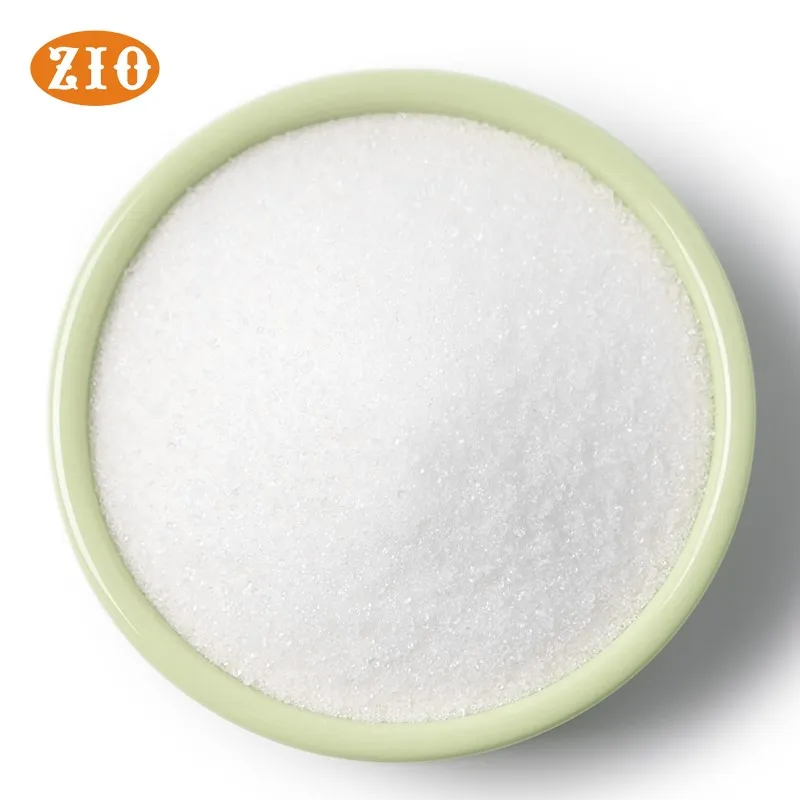
White to yellowish powder, or colorless to slightly yellowish viscous liquid or soft solid, odorless or with a slightly peculiar smell. It is readily soluble in ethanol and acetone. The monoester is soluble in hot water, but the diester or triester is poorly soluble in water. The higher the content of monoester, the stronger the hydrophilicity; the more diester and triester content, the stronger the lipophilicity. It generally has no distinct melting point and is stable below 120℃, but decomposes when heated above 145℃.
Based on the esterification number of the hydroxyl groups of sucrose, a series of sucrose fatty acid esters with different HLB values (1 to 16) ranging from hydrophobic to hydrophilic can be obtained. They have surface activity, can reduce surface tension, and have good emulsifying, dispersing, solubilizing, lubricating, penetrating, foaming, viscosity regulation, anti-aging, antibacterial and other properties. The softening point is 50 to 70℃, and the decomposition temperature is 233 to 238℃. They have optical rotation. They can be saponified when heated in acidic or alkaline conditions.
|
Items |
Specifications |
Analysis results |
|
Appearance |
White to tawny powder, odorless or with slight grease odor. |
Conforms |
|
Acid value (KOH) (mg/g) |
≤6.0 |
<0.1 |
|
Free sugar (sucrose) (%) |
≤10.0 |
8.0 |
|
Water (%) |
≤4.0 |
1.2 |
|
Ignition residue (%) |
≤4.0 |
3.3 |
|
Arsenic (as) (mg/g) |
≤1.0 |
<1.0 |
|
Lead (pb) (mg/kg) |
≤2.0 |
<2.0 |
Products Application
Emulsifiers can also be used as preservatives. High-quality sucrose fatty acid esters are odorless, tasteless and non-toxic, and are an excellent food emulsifier. They are used in meat products, emulsified flavors, fruit and egg preservation, candies, etc. According to the "Food Additives Food Hygiene Standard" (GB2760-1996) of China: Sucrose fatty acid esters can be used in meat products, sausages, emulsified flavors, fruit and egg preservation, ice cream, candies, bread, 1.5g/kg; emulsified natural color, 10.0g/kg.
1. The degree of esterification of sucrose fatty acid esters can affect their hydrophilic-lipophilic balance value (HLB).
2. When using it, generally, the sucrose esters are mixed with a small amount of water (or oil, ether, etc.) to be moistened first, then the required amount of water (oil, ethanol, etc.) is added, and appropriate heating is carried out to ensure that the sucrose esters are fully dissolved and dispersed.
3. The HLB value of sucrose esters can be adjusted by the content of monoesters, diesters and triesters. They have a wide range of applications and can be used in almost all food containing oils and fats. The specific applications are as follows:
(1) For meat products and fish paste products, it can improve the moisture content and the texture of the products, with a dosage of 0.3% to 1% (HLB 1 to 16).
(2) For baked goods, it can increase the dough toughness, increase the volume of the products, make the pores fine and uniform, and make the texture soft, prevent aging, with a dosage of 0.2% to 0.5% of flour.
(3) For biscuits and pastries, it can make the fat emulsify stably, prevent precipitation, improve the product quality, with a dosage of 0.1% to 0.5% (HLB 7).
(4) For chocolate, it can inhibit crystallization and prevent frosting. With a dosage of 0.2% to 1.0% (HLB value 3 to 9).
(5) For bubble gum, it makes it easier to knead, improves the chewing sensation, improves the flavor and softness, with an addition amount of 0.1% to 0.2% of the gum base (HLB value 5 to 11).
(6) For ice cream, it increases the emulsification and dispersion, improves the specific volume, improves thermal stability, shapeability and taste. For oils, 1.0% to 10%.
(7) For condensed milk and whipped cream to stabilize the emulsion, it can prevent water separation, improve the cream expansion force. With a dosage of 0.1% to 0.5% (HLB 1 to 16).
(8) For artificial cream, it can improve the compatibility of cream and water, and is effective in preventing splashing. With a dosage of 0.1% to 0.5% (HLB 1 to 3).
(9) For emulsified flavoring agents and solid flavoring agents, it is most suitable for stabilizing the emulsification of lemon oil, orange oil, grape oil, etc., preventing the loss of flavor in the products. With a dosage of 0.05% to 0.2% (HLB 7 to 16).
(10) For coating preservation of poultry, eggs, fruits and vegetables, it has antibacterial effects, keeps fruits and vegetables fresh, and extends the storage period. With a dosage of 0.3% to 2.5% (HLB 5 to 16).
In addition, it can also be used in soy milk, frozen food, sauce, beverage, rice, noodles, instant noodles, dumplings, etc.
Due to the synergistic effect of emulsifiers, using sucrose esters alone is far less effective than using them in combination with other emulsifiers. Appropriate compounding results in better emulsification effects.
Products Dosage
It is used for meat products, sausages, emulsified flavorings, preservation of fruits and eggs, ice cream, candies, bread, eight-bag-of-grain porridge, beverages, with a maximum usage of 1.5g/kg; for emulsified natural colorants, the maximum usage is 10.0g/kg; for candies (including chocolate and chocolate products), 10g/kg. In addition, this product can also be used as a component of gummy candy.
Products Datails
Products Qualification









Hot Tags: sucrose fatty acid ester, China sucrose fatty acid ester manufacturers, suppliers