



Products Description
Aroma is an important indicator of food flavor and has a significant impact on food quality. The processing of modern food often leads to the loss of aroma components that contribute to the food's flavor, resulting in a loss and weakening of the processed food's aroma. To compensate for and improve the flavor of food and enhance its quality, it is necessary to replenish and strengthen the lost aroma components in processed food. This requires the addition of food flavorings. Food flavorings play an irreplaceable role in ensuring the flavor quality of modern processed food. The raw materials and auxiliary materials used in food flavorings all have corresponding national standards. Food flavorings produced and used in accordance with the law are harmless to public health. This is fundamentally different from the illegal addition of non-food substances such as melamine, Sudan Red, clenbuterol, and formaldehyde in some foods.
As a type of food flavoring, meat flavoring is not a new invention in China. Developed countries in Europe and America have been using meat flavoring for a long time. China's meat flavoring industry started in the 1980s and has been widely applied in the food industry, including sausages, instant noodles, chicken essence, and seasonings.
|
Product name |
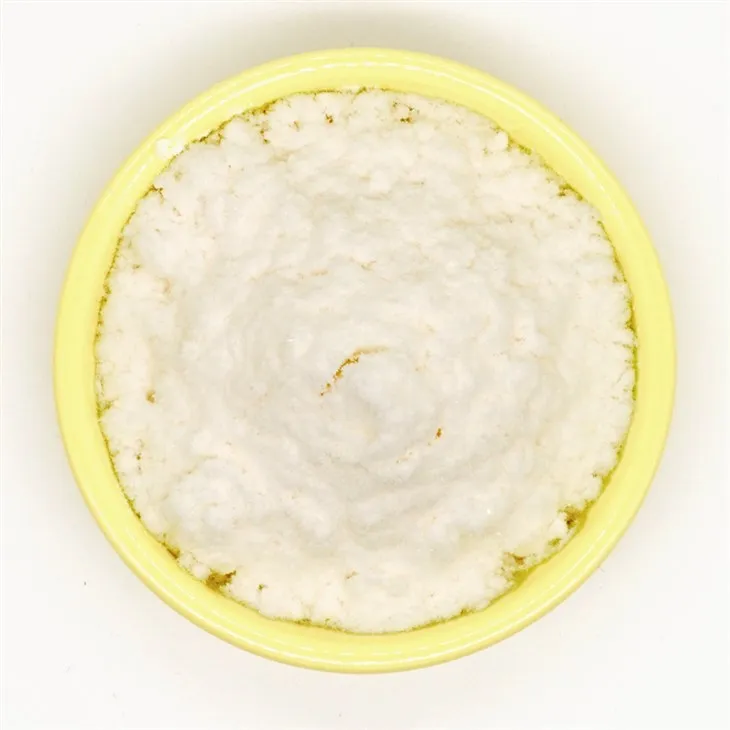
Chicken powder flavor |
|
|
Items |
Specifications |
Analysis results |
|
Appearance |
same as the samples of the same model |
same as the samples of the same model |
|
Odor |
same as the samples of the same model |
same as the samples of the same model |
|
moisture (%) |
≤10 |
2.36 |
|
Salt (measured as sodium chloride) (%) |
≤40 |
28.05 |
|
Total colony count (CFU/g) |
≤10000 |
1000 |
|
Coliform bacteria (MPN/g) |
≤1.50 |
0.36 |
These spices and flavor essences come in various forms such as oil, powder, and paste, with flavors ranging from pork, beef to sweet corn. The meat flavoring essences include: powder flavoring essences, liquid flavoring essences, and paste flavoring essences. Meat flavoring essences are classified into three types based on the manufacturing method: synthetic meat flavoring essences, reactive meat flavoring essences, and blended meat flavoring essences .
Powder flavoring essences
The characteristic is a strong direct sensation and the aroma is easily volatile. If produced using microcapsule technology and spray drying for refinement, the volatility is weak. The carriers are mostly refined salt and ring-shaped cyclodextrin, etc. Liquid fragrance
Characteristics: Rich aroma, realistic and full-bodied taste, long-lasting fragrance, high concentration. The carrier is hydrolyzed plant protein or propylene glycol, etc.
Creamy flavoring agent
Characteristics: Pure aroma, refined and concentrated through the Maillard reaction using natural raw materials. Rich and natural meat aroma, long-lasting fragrance, resistant to high temperatures, with natural meat broth aroma. The carrier is mostly various colloids.
Synthetic meat flavoring agent
Refers to meat flavoring agents prepared by blending single-component flavoring agents based on various meat product meat aroma components. Characteristics: Strong and realistic aroma. When used alone, the product has a strong top note but weak body note, and the overall meat aroma is thin. If only relying on single-component flavoring agents to prepare the aroma of cooked meat, it is still very difficult to form the overall flavor composition. Therefore, it is rarely used alone for scenting, but mainly for preparing the top note .
Blended meat flavoring agent
Is a meat flavoring agent prepared by blending single-component flavoring agents based on various meat product meat aroma components. The characteristics of this type of flavoring agent are strong and realistic aroma. When used alone, the product has a strong top note but weak body note, and the overall meat aroma is thin .
Reactive meat flavoring agent
Is a flavoring agent produced by using Maillard and other natural aroma reactions. It is a simulation of the aroma formation in the actual meat product processing process. Because it includes the oxidation decomposition of fatty acids in the meat product processing, the carbonyl reaction of sugar and amino acids, and various secondary or tertiary reactions of the products, hundreds of meat aroma components are formed. Based on this, various characteristic meat flavoring agents are prepared through blending and scenting. The characteristics of reactive meat flavoring agents are very realistic meat aroma, rich and intense fragrance, but the top note is slightly weak. It is mainly used for body scenting.
Products Function
The use of meat flavoring essence should be determined based on the actual conditions of different products and production rates, and it is necessary to pay attention to the combined use of various flavor essences. The general method of use is to combine powder flavor essence with liquid flavor essence or cream-like flavor essence. For processed high-temperature products, powder flavor essence is generally not used. The purpose of using flavor essence is to make up for the insufficient meat aroma caused by high production rate and poor quality of raw meat. When using the amount, it is necessary to pay attention not to overdo it, otherwise it will have a counterproductive effect and form an unpleasant smell. The processed products cannot rely solely on flavor essence for seasoning; they should also be combined with the natural aroma of the raw meat and the aroma of spices for comprehensive seasoning. Appropriate application plays a crucial role.
Food Additives
The functions of adding flavoring essence to food include assisting, stabilizing, supplementing, adding aroma, correcting taste, and substituting. After determining the product development goal, when choosing flavoring essence, it is not only necessary to consider the name and price, but also to request samples for sensory evaluation. From the samples, choose the flavor essence with pure aroma, whose head aroma, body aroma, and tail aroma are basically consistent, for flavoring experiments. Finally, the selection of flavor essence varieties should be determined according to the nature of the product.
The effect on the flavor of meat products
Enhancing aroma: In the processing of meat products, sometimes the raw materials do not have obvious aromas, and no obvious aroma is produced during the processing either. Only by relying on meat flavoring agents can the aroma of the food be enhanced. If one wants to make artificial meat present the flavors of beef or pork, etc., meat flavoring agents must be added. Enhancing the aroma: Some products have a relatively weak aroma. In such cases, meat flavoring essence needs to be added to enhance the aroma.
Products Application
Main applications: seasoning packets for various convenience foods, cooked meat products, compound seasonings (such as chicken essence), quick-frozen prepared foods, puffed snack foods, dishes, preservation and re-heating products, hot pot, noodle soups, and braised and marinated products, etc. The main function is to enhance the aroma and flavor of the applied products, thereby increasing the product's added value. The fragrance types include: meat fragrance type (pork, chicken, beef, mutton, duck, etc.), seafood fragrance type (shrimp, fish, crab, abalone, etc.). These spices and flavorings come in various forms such as oil, powder, and paste, and cover flavors like pork, beef, sweet corn, etc.
Products Qualification









Hot Tags: chicken flavor, China chicken flavor manufacturers, suppliers