

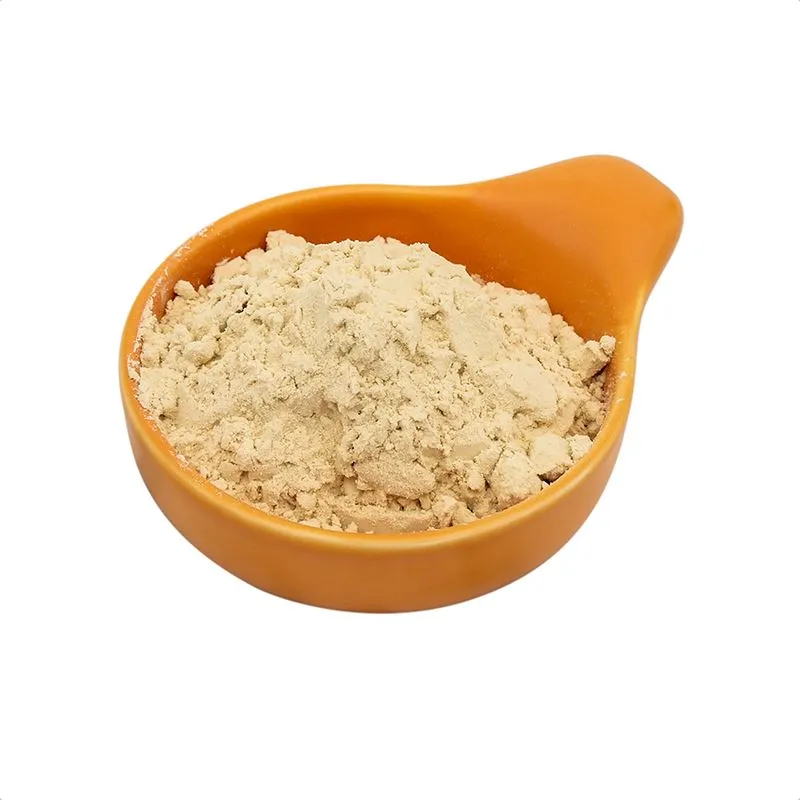


Products Description
Tea polyphenols (Green Tea Polyphenols, abbreviated as GTP) are also known as anti-oxidant essence, vitophenol, and anti-harmonizing essence. They are a complex of polyhydroxy phenolic compounds in tea, composed of more than 30 types of phenolic substances. The main component is catechin compounds, which are the main chemical components of tea with health benefits [2]. Tea polyphenols have various physiological activities such as antioxidant, radiation prevention, anti-aging, lowering blood lipids, lowering blood sugar, and inhibiting bacteria and enzymes.
Pure tea polyphenols are white amorphous crystalline substances. During the extraction process, a small amount of tea polyphenols undergo oxidation and polymerization, resulting in a light yellow to brown color, with a slight tea aroma and a bitter taste. They are easily soluble in ethanol, methanol, ethyl acetate, and acetone, slightly soluble in oils, and insoluble in organic solvents such as benzene and chloroform. They have good heat resistance and hygroscopicity. They remain stable at pH values of 2 to 7. They are prone to oxidation and polymerization under light or in conditions with a pH value greater than 8, and can form green-black compounds with iron ions.
Products Application
Food Industry
Antioxidants
Since tea polyphenols are mostly polyphenols with two or more adjacent hydroxyl groups, they have a strong hydrogen-donating ability and are thus an ideal antioxidant. Among the four main catechins, the antioxidant capacity is expressed as EGCG > EGC > ECG > EC. As an antioxidant for oil-based foods, it has excellent antioxidant properties and its efficacy is far superior to the artificially synthesized antioxidants 2,6-di-tert-butyl-4-methylphenol (BHT) and butylated hydroxyanisole (BHA). The antioxidant effect of tea polyphenols can be applied in meat product processing, oil storage, baking foods, dairy products, and fried foods, and can also be used in the preparation of various beverages. When freezing fresh fish, adding tea polyphenol antioxidants can prevent the oxidation of fish body fat. [5]
Food preservatives
The tea polyphenols have inhibitory activity against nearly a hundred types of bacteria in nature, demonstrating broad-spectrum antibacterial properties and making them excellent food preservatives. As a preservative, tea polyphenols can slow down the biochemical activities of fruits and vegetables after采摘, and delay their post-ripening period. Additionally, the preservative prepared with tea polyphenols can prevent discoloration and spoilage of various pastries, yogurt beverages, and processed livestock products. [6]
Food color stabilizers
The oxidation of pigments can cause changes in the color of food. Tea polyphenols have strong reducing properties and can prevent natural pigments (such as carotene, chlorophyll, safflower yellow, vitamin B2 and cochineal red, etc.) from fading due to light oxidation, thus having a certain effect on the stability of pigments. [2]
Food deodorizer
Halitosis is mainly caused by volatile sulfur-containing compounds and nitrogen-containing compounds. Among them, sulfides such as hydrogen sulfide and methanethiol have the strongest odor. Gum containing tea polyphenols has 10 times stronger deodorizing power than ordinary gum. For physiological halitosis, it is effective after chewing for 3 minutes. Additionally, by adding 0.1% green tea extract to wine and beverages, it can be developed into alcoholic beverages and beverages with anti-halitosis functions. These alcoholic beverages and beverages also have significant deodorizing effects on halitosis caused by methanethiol and other substances. [2]
Daily necessities
Tea polyphenols, as excellent additives for cosmetics and daily necessities, have the following significant effects: they have a strong antibacterial effect (including bacteria causing skin diseases and oral bacteria) and can inhibit oxidase activities (such as tyrosinase, glucose transferase of mutated streptococcus, uridine decarboxylase, lipid oxidase, etc.). They can prevent skin diseases, skin allergies, remove skin pigmentation, prevent wrinkles, prevent dental caries, tooth stains, periodontal inflammation and bad breath, etc. At the same time, they can protect the skin from damage caused by sunlight. Moreover, they can eliminate bad breath. Therefore, tea polyphenols can be used as antioxidants, preservatives, anti-wrinkle agents, skin whitening agents, radiation protectants, sunscreens and special cosmetic additives in cosmetics and daily necessities, as well as in daily-use cosmetics such as soap, bath liquid, shampoo, detergent, toothpaste, tooth powder, mouthwash, anti-odor mouthwash, etc., to enhance the functions of these products. [5]
In the field of medicine
Tea polyphenols can lower blood pressure, prevent blood clotting, reduce cholesterol and obesity, prevent arteriosclerosis and thrombosis, lower blood sugar, prevent diabetes, kill bacteria and fight viruses, also prevent diseases such as gastrointestinal tract, respiratory tract, influenza, prevent hepatitis, enhance immunity function, have various therapeutic effects such as strengthening teeth, preventing periodontal disease, preventing tooth decay, eliminating odor and detoxifying. [6]
Antioxidation
Tea polyphenols are an excellent natural antioxidant with significant antioxidant effects. They can eliminate excessive free radicals produced in the human body, protect the structure of cell membranes, slow down human aging, and extend human lifespan. Their antioxidant properties are closely related to the synergistic effect among various components. The optimal combination is EGCG (epigallocatechin gallate): ECG (epicatechin gallate): EGC (epigallocatechin): EC (epicatechin)=5:2:2:1. [7] Moreover, tea polyphenols and other antioxidants also have synergistic effects, such as VC, VE, carotenoids, and glutathione. These synergistic effects enhance the antioxidant effect of tea polyphenols. A large number of experiments have shown that the various pharmacological activities of tea polyphenols, such as anti-tumor, anti-aging, and lipid regulation, are closely related to the antioxidant properties of tea polyphenols.
Lipid regulation
Tea polyphenols can comprehensively adjust blood lipids, especially reducing the contents of serum TG (triglycerides), TC (total cholesterol), and low-density lipoprotein cholesterol (LDL-C), and increasing high-density lipoprotein. In addition, tea polyphenols are a strong inhibitor of low-density lipoprotein oxidation, effectively inhibiting the oxidative modification of LDL and having a certain inhibitory effect on the factors of atherosclerosis formation.
Antiviral and antibacterial
Tea polyphenols, as a broad-spectrum, potent, and low-toxic antibacterial drug, has been recognized by scholars in many countries around the world. In numerous antibacterial experiments, it has been found that it has inhibitory and killing effects on many pathogenic bacteria, especially on intestinal pathogenic bacteria, to varying degrees. At the same time, it can effectively prevent antibiotic-resistant Staphylococcus infections and has inhibitory activity against hemolysin. Moreover, tea polyphenols have a strong inhibitory effect on parasitic fungi that cause skin diseases in humans, such as head lice, macular vesicular lice, sweat-like vesicular lice, and stubborn lice. Tea polyphenols can also protect beneficial bacteria in the intestine.
Antitumor
Tea polyphenols exhibit anti-mutation effects in vitro and can inhibit skin, lung, pro-gastric, esophageal, pancreatic, prostate, duodenal, colon, and rectal tumors in rodents caused by carcinogens. The mechanisms by which tea polyphenols inhibit tumors include: antioxidant and free radical elimination; blocking the formation of carcinogens and inhibiting metabolic transformation in the body. Tea polyphenols can inhibit the synthesis of strong carcinogenic nitrosyl compounds in the body, further inhibiting the carcinogenic effect of nitrosamine compounds; inhibiting the activity of enzymes with carcinogenic effects, such as inhibiting the activity of telomerase to achieve its anti-cancer activity; enhancing the body's immunity; reversing the multi-drug resistance of tumor cells; and affecting the opening of PT channels (mitochondrial permeability change channels). It is speculated that tea polyphenols may directly act on the protein components of PT channels, thereby regulating the opening of mitochondrial permeability change channels and protecting mitochondria from damage; inhibiting the biological synthesis of tumor cell DNA. Tea polyphenols can induce DNA double-strand breaks in tumor cells, showing a positive correlation between tea polyphenol concentration and the degree of DNA double-strand breaks. Thus, it can inhibit the synthesis of tumor cell DNA, further inhibiting the growth and proliferation of tumors. [6]
Neuroprotective effect
The tea polyphenols can cross the blood-brain barrier, eliminate free radicals and reactive oxygen species (ROS), chelate metal ions, regulate various signaling pathways, and increase the survival rate of neurons, thereby exerting a neuroprotective effect. The antioxidant activity of tea polyphenols is not the only mechanism for its neuroprotective effect; it can also exert neuroprotective effects by regulating signaling pathways (such as MAPK, PKC, and Akt/P13K, etc.). Tea polyphenols interact with various signaling pathways, can increase the expression of neuroregulatory proteins and neuroprotective proteins, and increase the number of different types of neurons, thereby exerting a neuroprotective effect. The biological effects of tea polyphenols are in line with the drug treatment strategies for Alzheimer's disease and Parkinson's disease, so tea polyphenols are of great significance for the treatment of Alzheimer's disease and Parkinson's disease, and have a good application prospect in the prevention and treatment of neurodegenerative diseases. [7]
Other effects
Tea polyphenols have unique protective and therapeutic effects on the skin, which can effectively prevent the damage of ultraviolet rays to the skin, and also have effects such as anti-aging and wrinkle prevention, removing brown spots, preventing acne, preventing edema and anti-allergy. In addition, tea polyphenols also have the effects of improving chronic renal failure and glomerulonephritis, as well as regulating immunity. [6]
Aquaculture
Due to the excellent antioxidant, bactericidal, antiviral, anti-inflammatory, and lipid-lowering effects of tea polyphenols, their application in the research of aquatic animal breeding and processing has been increasing, and they have shown good effects in promoting immunity, promoting growth, improving meat quality, and preserving freshness. Tea polyphenols can increase the ATP content in the muscle of grass carp, and the increase in ATP content can increase the content of 5′-IMP in the post-slaughter muscle. Therefore, tea polyphenols may increase the 5′-IMP content in the muscle of grass carp, thereby improving the flavor of the fish meat. At the same time, as a good natural antioxidant, tea polyphenols can effectively inhibit bacterial reproduction, as well as the production of volatile trimethylamine and other substances, prevent lipid oxidation, and thus extend the shelf life of fish meat products.
Products Qualification








Hot Tags: tea polyphenols powder, China tea polyphenols powder manufacturers, suppliers